+ 91 8108850334
info@parineeinterio.in
+ 91 8108850334
info@parineeinterio.in

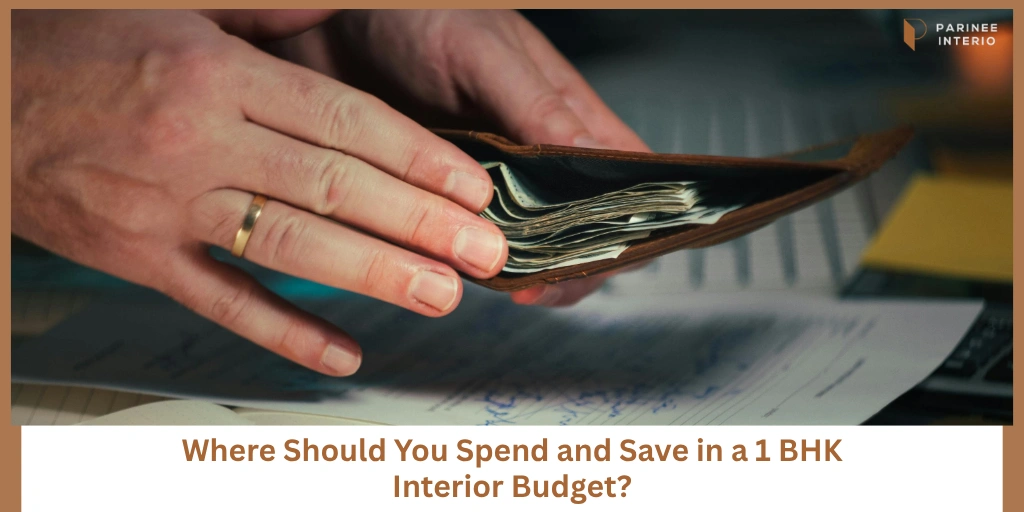
You can spend ₹5–8 lakhs on your 1 BHK…
…and still feel like something is missing.
The storage doesn’t feel enough.
The kitchen doesn’t function smoothly.
The house looks good, but doesn’t work well.
This happens more often than you think.
Not because the budget was low — but because the money was spent in the wrong places.
- Too much spent on decorative panels
- Too little spent on storage
- Focus on looks instead of usage
Here’s the shift you need:
The goal is not to spend more.
The goal is to spend in the right places.
In this guide, you’ll learn how to prioritise your interior budget so you don’t regret your decisions later.
Plan your 1 BHK interior budget clearly before you start so you don’t end up spending randomly across categories.
The 80/20 Rule of 1 BHK Interiors (Where Most Value Comes From)
Here’s a simple way to look at it.
20% of your decisions will define 80% of your home’s functionality.
And that 20% is:
- Kitchen
- Wardrobes
- Storage
These are the areas you use every single day.
If these are done right:
- Your home feels organised
- Daily life becomes easier
- Maintenance stays low
If these are done wrong:
- You feel the problem every day
So when thinking about where to spend more in home interiors, start here.
Where You Should Spend More (High-Impact Areas)
This is where your budget should go first.
Kitchen (Top Priority)
Your kitchen is the most used space in your home.
You open drawers, cabinets, shutters every day.
If you save money here:
- Cheap hardware fails quickly
- Storage becomes inefficient
- Daily use becomes frustrating
Invest in:
- Good-quality hardware
- Smart storage layout
- Durable finishes
Saving here often leads to long-term issues.
Wardrobes & Storage
Storage decides how your home feels.
Too little storage → clutter
Good storage → clean and organised space
Spend on:
- Full-height wardrobes
- Proper internal layout
- Functional drawers and sections
This is where your home becomes practical.

Hardware & Fittings
These are not visible, but they matter the most.
Hinges. Channels. Sliding systems.
You won’t notice them when they work —
but you’ll definitely notice when they don’t.
These are long-term investments.
Where You Can Save Without Regret
Now let’s talk about where you can reduce cost without affecting your daily life.
Decorative Panels
They look good, but they don’t add functionality.
You can always add them later.
False Ceiling
Keep it simple.
You don’t need heavy design in a small 1 BHK.
Minimal ceiling + good lighting works better.
Premium Finishes
Instead of expensive acrylic or veneer, go for laminates.
They look good, cost less, and are easier to maintain.
Important point:
These things affect how your home looks —
not how it works.
How to Decide What’s ‘Essential’ vs ‘Optional’
If you’re confused, use this simple framework.
Essentials
- Kitchen
- Wardrobes
- Storage
Without these, your home won’t function properly.
Enhancers
- Lighting
- TV unit
- Basic design elements
They improve comfort and usability.
Luxuries
- Wall panels
- Designer ceilings
- Premium finishes
They improve aesthetics.
Start with essentials.
Then move to enhancers.
Then, if budget allows, go for luxuries.
That’s how you prioritise smartly.
Real Budget Allocation Example (₹5–7L Scenario)
Here’s how a practical budget allocation for interiors usually looks.
| Area | Budget Allocation |
|---|---|
| Kitchen | 30% |
| Wardrobes | 25% |
| Living Area | 20% |
| Bedroom | 15% |
This is how most well-planned homes distribute their budget.
Not equally — but based on usage.
Common Mistakes While Prioritising Interior Budget
This is where most people go wrong.
- Spending too much on looks
- Ignoring storage planning
- Over-customising everything
- Starting work without a clear plan
These mistakes don’t show immediately —
but they affect your daily life later.
Compare your interior budget allocation properly and avoid overspending in the wrong areas using a structured BOQ and planning sheet.
The Smart Approach Most Homeowners Follow
People who get this right follow a simple approach:
- Prioritise function first
- Add aesthetics later
- Upgrade gradually
They don’t try to finish everything in one go.
And that’s why their homes feel better.
A well-planned home always works better than an over-designed one.
Conclusion: Prioritisation Is What Makes Your Budget Work
Your budget is not the problem.
Wrong allocation is.
If you:
- Spend on the right areas
- Avoid unnecessary elements
- Plan before execution
You’ll get a home that works for you — not against you.
Get a personalised plan to decide exactly where to spend and where to save in your 1 BHK interior based on your layout and lifestyle.
FAQs
Start by focusing on high-usage areas like the kitchen and wardrobes. These impact daily life the most. Once essentials are done, allocate remaining budget to design and aesthetics.
Invest more in kitchen fittings, storage solutions, and durable hardware. These ensure long-term usability and reduce maintenance issues.
You can reduce cost on decorative elements like panels, false ceilings, and premium finishes. These affect appearance but not functionality.
Essentials include a modular kitchen, wardrobes, and basic storage. These form the core of a functional home.
Yes. Many homeowners complete essential work first and gradually add design elements later. This helps manage budget without compromising functionality.