+ 91 8108850334
info@parineeinterio.in
+ 91 8108850334
info@parineeinterio.in

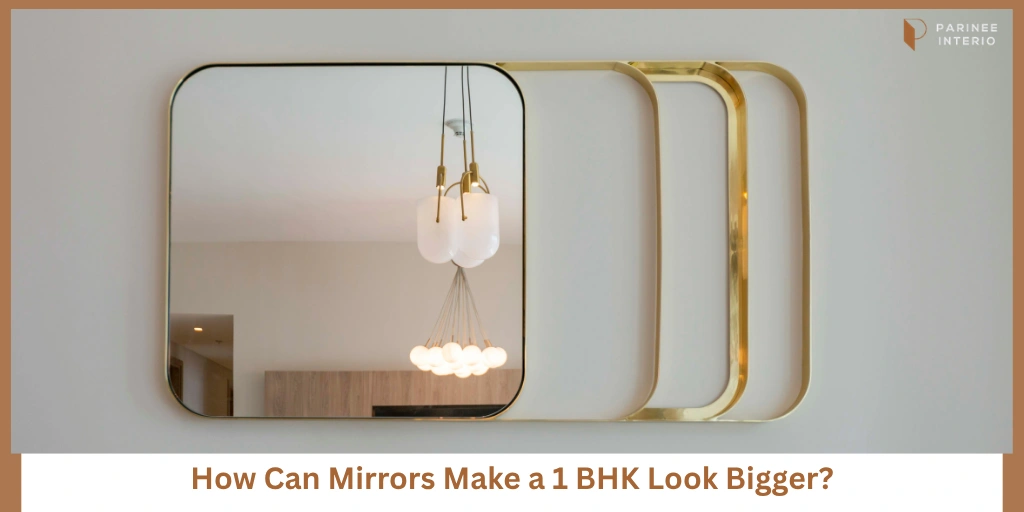
Mirrors are one of the easiest ways to make a small home feel bigger.
But here’s the problem.
Most people:
- Place mirrors randomly
- Use them only for decoration
- Focus on design instead of placement
And then say…
“It didn’t really make a difference.”
That’s because mirrors don’t work like decor.
They work like a design tool.
If placed correctly, they can:
- Increase light
- Add depth
- Make your space feel larger
If placed incorrectly, they do nothing—or sometimes make the space feel worse.
So instead of asking “which mirror looks good,” the better question is:
Where should you place it for maximum impact?
Why Mirrors Work So Well in Small Homes
Before placement, you need to understand why mirrors even work.
Because once you get this, your decisions become easier.
They Reflect Light
Natural light hits the mirror… and spreads.
This makes your space:
- Brighter
- More open
- Less dull
Even a small window can feel like a bigger light source.
They Create Depth
A mirror tricks your eye.
It creates the feeling that space continues beyond the wall.
That’s why:
- Narrow rooms feel wider
- Small areas feel deeper
They Reduce Visual Heaviness
Heavy furniture and dark walls make spaces feel tight.
Mirrors break that.
They:
- Add lightness
- Balance heavy elements
- Improve visual flow
Simple way to remember:
Mirrors multiply what you already have—light and space.
The 3 Rules of Mirror Placement in a 1 BHK
Before jumping into ideas, these rules matter more than anything else.
Place Opposite a Light Source
This is the most effective trick.
- Opposite a window
- Near a light source
The mirror reflects light across the room.
Without light, mirrors lose their impact.
Avoid Reflecting Clutter
A mirror doubles whatever it faces.
If it reflects:
- Mess
- Storage clutter
- Busy areas
You’ll feel the space is even more crowded.
Always reflect something clean.
Use Proportionate Size
Very small mirrors don’t help much.
They:
- Reflect less light
- Create weaker depth
Go for:
- Medium to large mirrors
- Proportionate to your wall
Key insight:
Placement matters more than design.
Plan Your Living Room Layout Before Adding Mirrors
Most people buy a mirror first…
And then try to “fit it somewhere.”
That rarely works.
Because mirror placement depends on:
- Light direction
- Furniture placement
- Movement space
Without planning:
- You reflect the wrong areas
- You block light
- You lose the effect
Living Room Layout Planner (Helps you map light direction, furniture placement, and ideal mirror positions)
10 Mirror Placement Ideas That Make a 1 BHK Look Bigger
Now let’s get practical.
These ideas are based on placement—not decoration.
1. Opposite a Window
Best For: Maximum light reflection
This is the most powerful placement.
- Doubles natural light
- Brightens the entire room
- Makes space feel open
If you do only one thing—do this.
2. Behind the Sofa
Best For: Creating depth
Placing a mirror behind your seating area:
- Expands visual space
- Makes the living area feel larger
- Adds balance
Works well with rectangular rooms.
3. Full-Length Mirror on a Wall
Best For: Height illusion
A vertical mirror:
- Makes ceilings feel higher
- Adds vertical depth
- Improves visual proportion
Great for compact living rooms.
4. Mirror Wall Panel
Best For: Dramatic expansion
Using a large mirror panel:
- Creates strong depth
- Makes the wall “disappear” visually
Use carefully—don’t overdo it.
5. Near the Dining Area
Best For: Increasing visual width
Mirrors here:
- Make the space feel wider
- Reflect activity
- Add openness
Works well in combined living-dining layouts.
6. Entryway Mirror
Best For: Immediate openness
As soon as you enter:
- Space feels bigger
- Light reflects instantly
- Entry looks less tight
A small change with big impact.
7. Corner Mirror Placement
Best For: Dead space
Corners often go unused.
A mirror here:
- Activates the space
- Adds depth
- Reduces emptiness
Useful for awkward areas.
8. Mirror Behind TV Unit (Subtle Use)
Best For: Depth without distraction
A subtle mirror behind or beside the TV:
- Adds depth
- Keeps design minimal
- Doesn’t overpower the room
Use lightly—avoid glare.
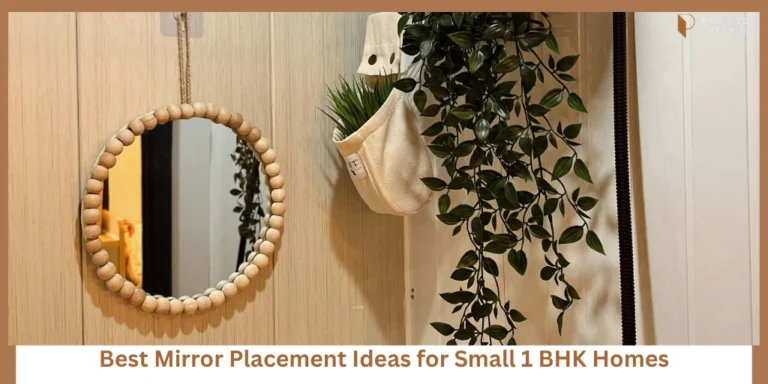
9. Multiple Small Mirrors (Cluster)
Best For: Design + function
Instead of one large mirror:
- Use a cluster
- Maintain spacing
- Keep it balanced
Gives a decorative + functional effect.
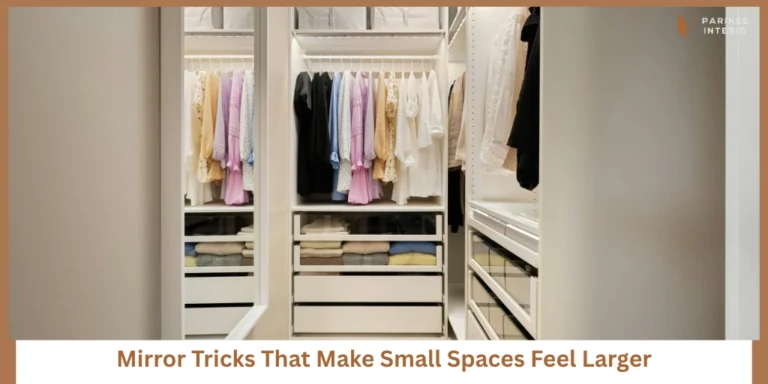
10. Wardrobe Mirror in Visible Area
Best For: Multi-purpose use
Instead of hiding mirrors inside wardrobes:
- Use mirrored shutters
- Place them strategically
You get:
- Utility
- Space expansion
Important takeaway:
The right placement creates space—even when there isn’t more of it.
Use This Furniture & Decor Checklist Before Finalizing Your Setup
Mirror placement doesn’t work in isolation.
It depends on everything around it.
If your furniture is misaligned:
- Mirror impact reduces
- Space feels cluttered
Before finalizing:
- Check layout
- Check decor placement
- Check visual balance
Furniture & Decor Checklist (Helps you align mirrors, furniture, and decor for a balanced small-space setup)
Where NOT to Place Mirrors in a Small Home
This is just as important as knowing where to place them.
Facing Clutter
If your mirror reflects clutter, you double the mess visually.
Facing Blank Walls
No light. No depth.
Just reflection of emptiness.
Poor Lighting Areas
Dark corners don’t benefit much from mirrors.
You need light for impact.
Key reminder:
Wrong placement can reduce the effect.
How to Choose the Right Mirror Size and Style
Now let’s talk about selection.
Large vs Small
Large mirrors:
- Reflect more
- Create stronger impact
Small mirrors:
- Limited effect
- Mostly decorative
Frame vs Frameless
Frameless:
- Cleaner
- More modern
- Better for small spaces
Framed:
- Adds design
- Works if minimal
Shape
Rectangular:
- Best for most layouts
Round:
- Softens the space
Custom shapes:
- Use carefully
How Mirrors Help Make Your Living Room Feel Bigger
Let’s bring it all together.
Mirrors:
- Reflect light → brighter space
- Add depth → larger feel
- Reduce heaviness → better balance
They don’t add space.
They make your existing space feel more open.
Conclusion: Smart Placement Creates Instant Impact
You don’t need major renovation to improve your space.
Sometimes, small changes make the biggest difference.
And mirrors are one of the easiest ways to do that.
But only when used correctly.
Make Your 1 BHK Feel Bigger Without Adding More Furniture
If you’re unsure where to place mirrors in your home, don’t guess.
Because placement matters more than design.
We’ll help you:
- Plan your layout
- Identify the right mirror positions
- Improve your space without clutter
Personalized Living Room Layout + Mirror Placement Plan (Get expert guidance on where to place mirrors for maximum space and light impact)