+ 91 8108850334
info@parineeinterio.in
+ 91 8108850334
info@parineeinterio.in

Most Mumbai homeowners start interiors with excitement… and land in confusion.
Different designers give different timelines, society rules slow down work, and quotes rarely look comparable.
Small rooms, tight layouts, busy schedules, and strict building norms make planning a must.
Once you understand how the process actually works — from consultation to handover — the entire journey feels far more predictable and stress-free.
Step 1: First Consultation — Understanding Your Space, Needs & Budget
The process begins with a conversation. Before drawings, before finishes — clarity comes first.
A good first meeting covers:
- Your lifestyle and daily routine
- How much storage you need
- What colours and styles you’re drawn to
- Pain points with your current setup
- Budget expectations
- Whether your flat is ready for measurements
This step sets the direction for every decision that follows.
The goal: design a home that matches your life — not just inspiration pictures.
Step 2: Site Measurement & Evaluation
Once you’re aligned, the designer visits the site to take accurate measurements.
What’s checked during this visit:
- Every wall, beam, and column
- Electrical points and switchboards
- Natural light direction
- Ventilation
- Structural restrictions
- Society rules about working hours, drilling, noise, and permissions
Measurements are the foundation of the entire project — even a one-inch error can affect modular furniture or appliance fitment.
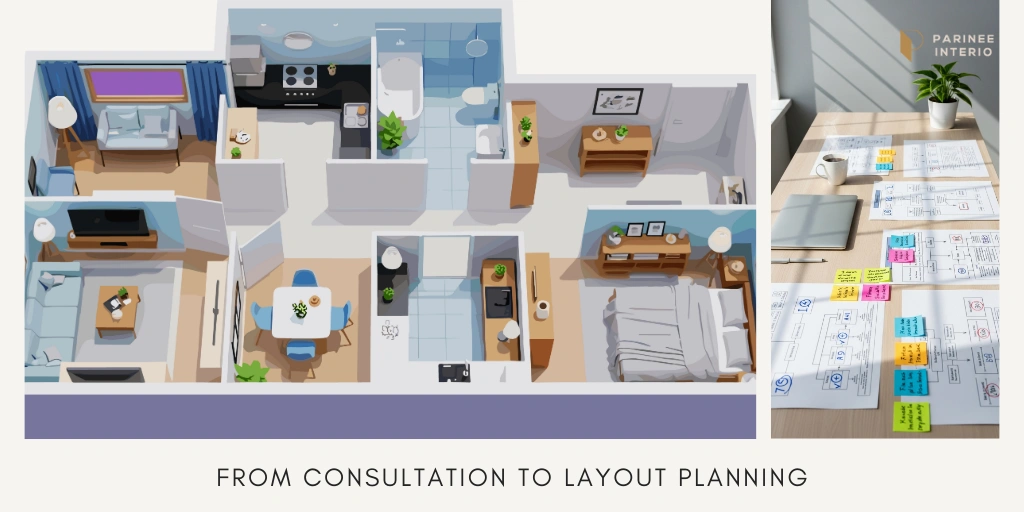
Step 3: Layout Planning — The Foundation of Your Interior
The layout decides how you live inside your home.
3 key things happen here:
Furniture Placement
- Sofa placement
- Dining alignment
- TV unit location
- Bed orientation
- Walking paths
Storage Mapping
- Wardrobe sizes
- Kitchen storage distribution
- Entry storage
- Living room units
Functional Zones
- Study corner
- Pooja space
- Kids’ study
- Work-from-home setup
A well-planned layout prevents remodeling later — which is one of the costliest mistakes Mumbai homeowners make.
Step 4: Concept Design & Moodboards
Once the layout is approved, your designer creates a visual direction.
Concepts include:
- Colour palette
- Material selection
- Furniture style
- Wall textures
- Lighting mood
- Room-wise theme
Moodboards help you visualise how your entire home will feel — warm, minimal, vibrant, luxe, modern, soft… whatever suits your personality.
Step 5: 3D Designs & Visualisation
This is the step homeowners wait for.
3Ds allow you to:
- See how each room will look
- Check proportions and spacing
- Understand finishes and colours
- Visualise wardrobe, kitchen, and storage layouts
- Make changes before production begins
3D designs reduce miscommunication and remove uncertainty, especially for first-time renovators.
For Mumbai homes where space is limited, visualisation avoids expensive layout mistakes.
Step 6: Material Selection — The Most Important Decision
Materials decide durability, longevity, and ease of maintenance — especially in humid Mumbai weather.
What you finalise in this stage:
- Plywood grade
- Laminate / acrylic / PU finishes
- Hardware brands
- Kitchen countertop material
- Bathroom materials
- False ceiling and lighting items
- Paint and texture finishes
This step is where your budget and long-term expectations meet.
Step 7: BOQ (Bill of Quantities) & Final Estimate
This is the stage where everything becomes clear in writing.
A BOQ includes:
- Room-wise costing
- Material list and brands
- Hardware specifications
- Electrical, plumbing, painting details
- Modular vs carpenter-made work
- Labour charges
- Timeline commitments
A detailed BOQ protects you from hidden charges and scope confusion.
If a designer cannot give a proper BOQ, that’s a red flag.
Step 8: Final Approval & Contract
Before work begins, both sides finalise:
- Payment schedule
- Material list
- Design drawings
- Timeline
- Warranty terms
- Scope of work
- Change policy
This ensures you always know what’s included and what’s not.
Step 9: Factory Production (For Modular Furniture)
Modular furniture is manufactured in a factory — which means:
- Cleaner work
- Faster installation
- Higher precision
- Better finishing
- No disturbance to neighbours
The typical factory workflow includes:
- Cutting and shaping
- Edge banding
- Laminate or PU finishing
- Hardware installation
- Pre-assembly checks
For Mumbai apartments where societies restrict working hours, modular is a huge advantage.
Step 10: On-Site Execution Begins
This is where your home starts transforming.
On-site work usually includes:
- Electrical point shifting
- Plumbing changes
- False ceiling
- Wall preparation and painting
- Modular furniture installation
- Countertop work
- Cleaning and finishing
The site is managed in coordination with society guidelines to avoid delays.
Step 11: Regular Site Visits & Quality Checks
A professional designer doesn’t just send carpenters and vanish.
Quality checks include:
- Material verification
- Alignment of cabinets and shutters
- Checking installation quality
- Monitoring progress
- Ensuring electrical and plumbing work is correct
- Mid-stage client walk-throughs
This step ensures the final outcome matches the approved design.
Step 12: Final Handover
The last step includes:
- Checking all hardware movement
- Aligning doors and drawers
- Electrical testing
- Painting touch-ups
- Cleaning
- Sharing warranty documents
- Handing over keys and manuals
A good handover makes sure your home is ready to move in — not half-finished.
How Long Does the Interior Design Process Take in Mumbai?
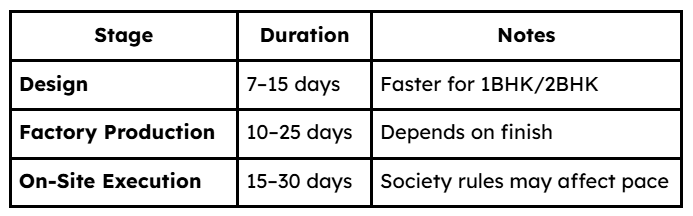
Most projects take 30–60 days end-to-end.
Mistakes Homeowners Make During the Interior Process
- Rushing approvals
- Making major changes mid-way
- Choosing materials only by price
- Ignoring storage planning
- Not checking dimensions
- Paying too much advance without BOQ
Avoiding these mistakes saves both time and money.
What a Good Designer Guarantees
A reliable designer ensures:
- Clear communication
- Transparent BOQ
- High-quality materials
- Skilled labour
- Defined timelines
- Regular supervision
- Smooth handover
This clarity is what separates professional firms from random contractors.
- Clear communication
Summary: A Clear Process Makes Interiors Stress-Free
Good interiors aren’t about luck — they’re about a well-managed process.
When each step is clear, the final home looks better, lasts longer, and matches your lifestyle exactly.
Want the Full Interior Design Process Roadmap?
Get the downloadable version with:
✔ Step-by-step checklist
✔ Material guide
✔ Budget planner
✔ Timeline tracker