+ 91 8108850334
info@parineeinterio.in
+ 91 8108850334
info@parineeinterio.in


If you are planning interiors for your Mumbai home, you already know how confusing the quoting process can become. One designer gives a low price, another gives a much higher quote, and a third sends a document that is impossible to understand.
Most homeowners end up asking the same question:
“Why is there so much difference in interior quotes for the same 2BHK or 3BHK?”
The truth is simple:
Interior quotes differ not because of price, but because of what is included inside the price.
By the end of this guide, you will know exactly how to compare interior offers, filter out confusing quotes, and shortlist the right designer for your home. This is a vendor-aware stage, so the goal is to help you make a confident decision.
Why Comparing Interior Quotes in Mumbai Is Confusing (But Important)

Many Mumbai homeowners go through this:
You collect 3 quotes.
One designer gives a very low price.
One gives a very high price.
One looks detailed but is full of technical terms.
The biggest problem is that most people compare only the final number, not the scope, not the material, and not the execution process.
This creates confusion and often leads to overspending later.
Here’s why Mumbai quotes differ so much:
- Different material brands (plywood, laminate, hardware)
- Different internal structure quality
- Difference in number of design revisions
- Carpentry vs modular manufacturing
- Site supervision frequency
- Hidden civil or electrical work not included
- Different levels of finishing and warranty
If you compare only the total amount, you will never understand the real value.
This guide will show you exactly how to compare quotes interior designers in Mumbai offer, so you shortlist confidently and avoid future regrets.
Step 1 — Don’t Compare Price First. Compare the Scope First.
Most homeowners make this mistake:
They start comparing the total cost.
But professionals start with the scope of work, because price is always based on what’s included.
A clean scope defines:
- What materials are included
- What furniture is planned
- How many design hours are covered
- How many site visits are included
- What finishing items are part of the quote
- What labour and installation activities are included

Below is a simple sample comparison:
Scope Comparison Table
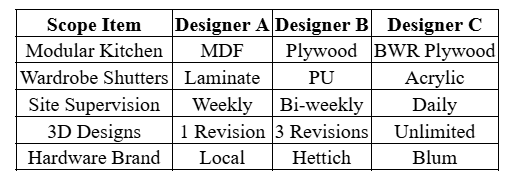
If you compare only the grand total, Designer A will look cheaper.
But after scope comparison, the picture becomes clear.
Step 2 — Decode Material Specifications (The Real Price Difference)
Material specifications decide almost 40% of the interior cost.
A cheaper quote often hides cheaper materials such as MDF or particle board instead of plywood, or local laminate instead of branded ones.
Here are the basics in simple terms:
Furniture Materials
- Plywood (best for durability)
- MDF (mid-range)
- Particle board (low-cost, not long-lasting)

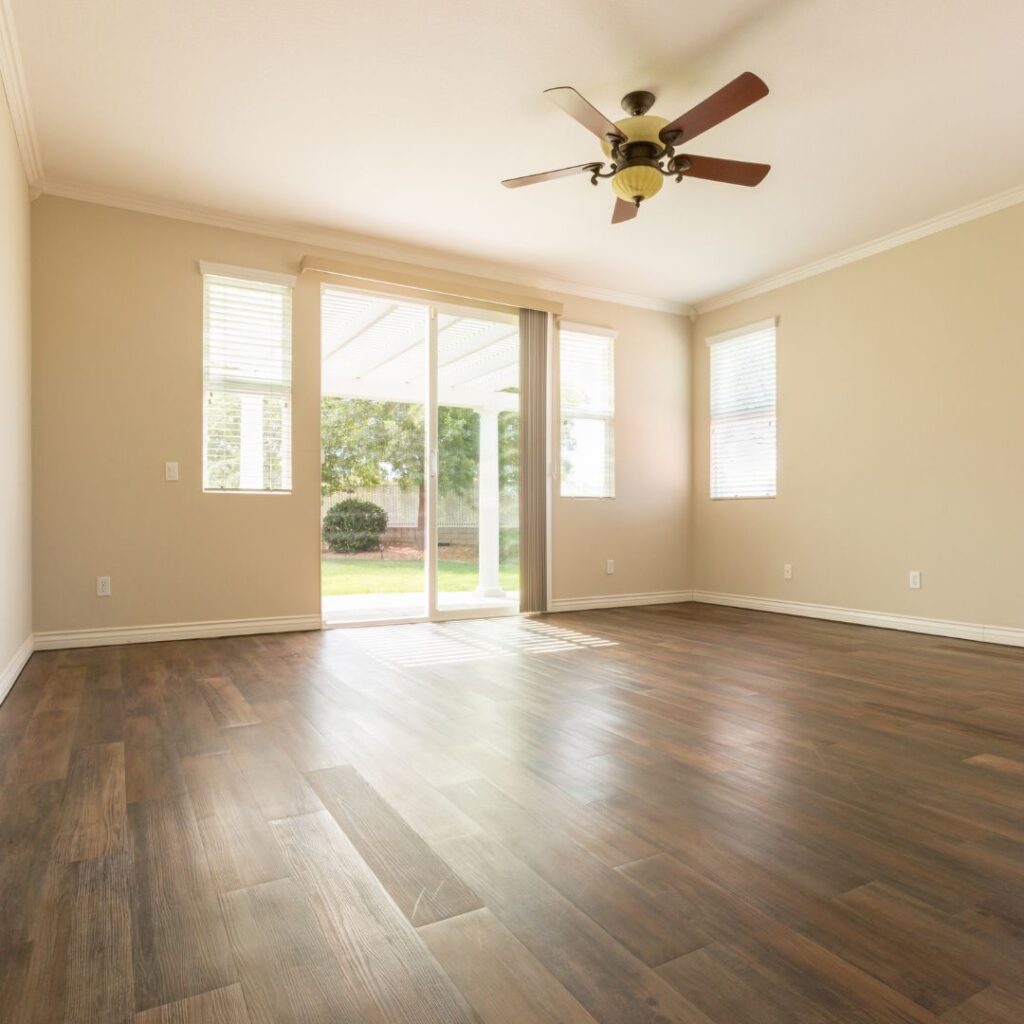
Laminate & Finishes
- Standard laminate
- Premium laminate
- PU finish
- Acrylic finish
Hardware
- Local hydraulic hinges
- Hettich / Hafele
- Blum (Premium)
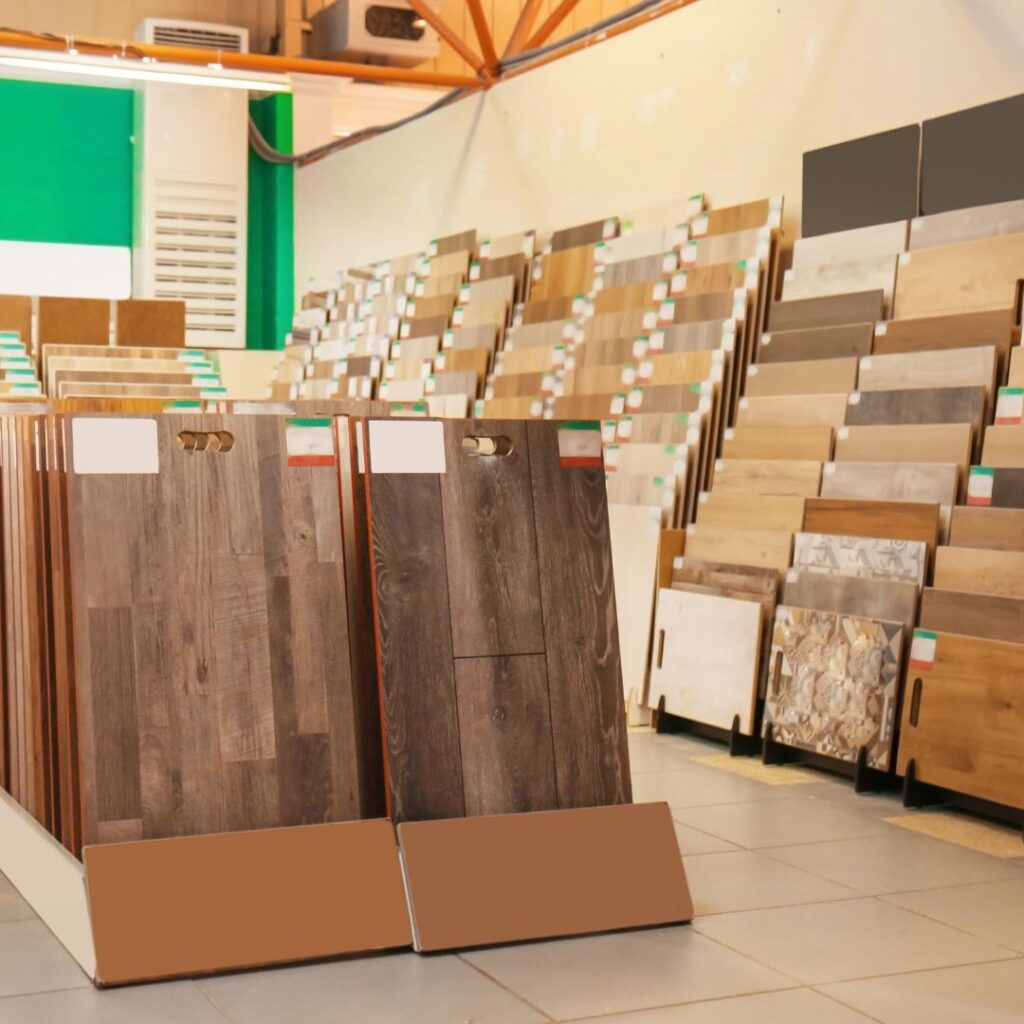
Simple Material Comparison

Always check if the quote includes brand names.
If the quote just says “ply”, “hardware”, or “laminate” without specifications, it is not transparent.
Step 3 — Check What’s Included vs What’s Excluded (Hidden Costs Alert)
A transparent quote clearly shows what is included and what is not.
In Mumbai, hidden costs are one of the biggest reasons homeowners overshoot budgets.
Commonly Excluded Items
- Civil work
- Electrical rewiring
- POP or false ceiling
- Painting
- Deep cleaning
- Soft furnishings
- Furniture shifting
- Extra storage units like bar units or crockery units
Mumbai-Specific Hidden Costs
- Older buildings often need electrical rewiring
- High-rise buildings may require extra labour
- Some societies need NOCs for drilling and civil work
- Kitchen plumbing changes are usually excluded
If these are not mentioned, ask directly.
Step 4 — Understand the Designer’s Process & Team Strength
Two designers can quote the same price but deliver very different results.
The execution process and team strength matter more than the quote itself.
Key Factors to Check
- Do they provide 3D designs?
- How many design revisions are included?
- Is the execution team in-house or outsourced?
- How many ongoing projects do they handle?
- Frequency of site supervision?
- Do they share weekly progress reports?
- Experience with Mumbai society permissions?
Questions to Ask
- Who will be handling my project personally?
- How large is your execution team?
- How do you manage delays due to society rules?
Step 5 — Demand a Transparent Cost Breakdown (No Lump-Sum Quotes)
A lump-sum quote is the biggest red flag.
Without item-wise breakup, you can’t compare anything.
You should always ask for a line-by-line cost breakup.
Ideal Cost Breakdown Should Include:
- Modular kitchen
- Wardrobes
- Beds
- TV unit
- Electrical
- False ceiling
- Painting
- Hardware brands
- Labour charges
Sample Structure
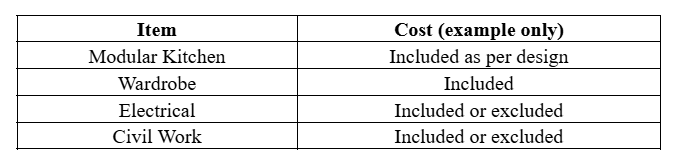
A clear breakup helps you see which designer is giving real value.
Step 6 — Compare Timelines, Not Just Pricing
Mumbai projects often face delays due to:
- Society permissions
- Limited working hours
- High-rise elevator restrictions
- Festival months
- Unexpected civil fixes
A timeline that is too fast is unrealistic.
A timeline that is too slow shows poor planning.
The ideal approach is to choose a designer who gives:
- A realistic timeline
- A clear milestone chart
- Weekly updates
Step 7 — Look for Warranty, After-Sales & Site Communication
After-sales support matters a lot in Mumbai because:
- Humidity affects furniture
- Hardware loosens over time
- Finishes need maintenance
- Hinges and channels need servicing
Good Designers Provide:
- Hardware warranty
- Workmanship warranty (3–5 years)
- Service visits
- Clear communication
Ask how post-installation support is handled.
Step 8 — Red Flags That Mean “Reject This Designer”
Here are the clear rejection signals:
- No material specification
- Quote is too cheap
- No detailed drawings
- No site supervision
- Payment terms are not clear
- No GST invoice
- No written contract
- Sudden upselling after the quote
If two or more red flags appear, do not proceed.
Step 9 — How to Shortlist 2–3 Designers From Your Quote List
Use this simple method to shortlist the right designer.
Shortlisting Formula
A designer should meet at least 4 out of these 6 points:
- Transparent scope of work
- Clear material specifications
- Item-wise cost breakup
- Realistic timeline
- Warranty included
- Good communication
If the designer meets fewer than 4, do not shortlist.
FAQs — Quick Answers for Mumbai Homeowners
Why are interior quotes so different in Mumbai?
Because materials, scope, supervision, and exclusions vary widely.
Should I pick the cheapest quote?
No. Cheap quotes usually hide exclusions and cheaper materials.
What is the ideal budget for a 2BHK interior in Mumbai?
Budgets vary depending on materials, scope, and finish choices.
How do I know if a designer is overcharging?
Ask for a line-by-line breakup and compare it with other quotes.
Should I check site supervision frequency?
Yes. It directly affects quality.
Conclusion
Comparing interior quotes in Mumbai becomes easy once you know what to look for.
A transparent scope, clear materials, proper breakup, realistic timelines, and good communication are the real indicators of value—not the cheapest price.
If you want a clean, transparent interior quote for your Mumbai home, simply share your floor plan and request a detailed breakdown.
You will instantly see the difference between a confusing quote and a professional one.