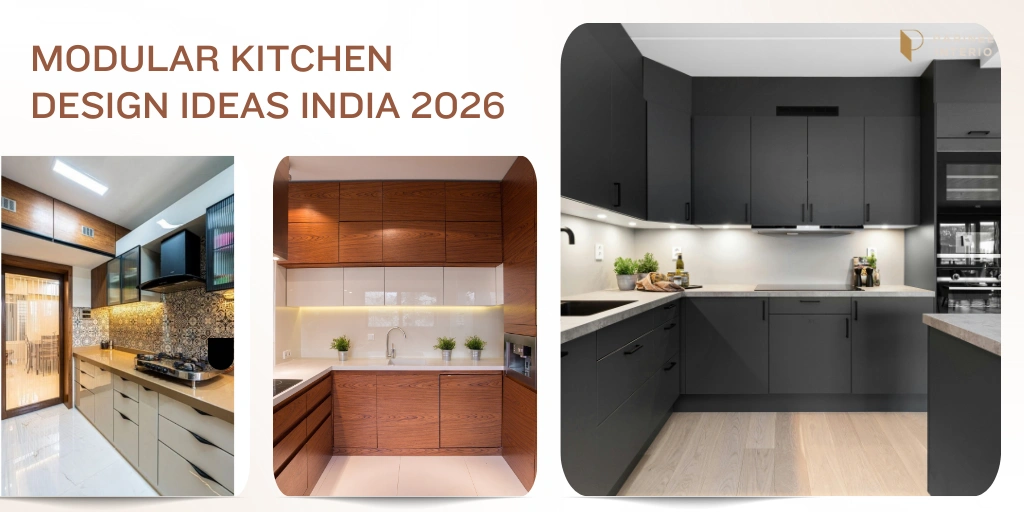
Indian kitchens in 2026 are no longer just about looking modern.
They are being designed around real life.
Daily cooking, heavy use, storage stress, easy cleaning, and space shortage are now shaping how kitchens look and function.
At the same time, homeowners feel confused.
One website shows glossy white kitchens, another shows dark wood finishes, and Instagram keeps throwing new ideas every day.
People want a kitchen that looks good and works smoothly, but choosing the right design feels overwhelming.
This blog breaks down practical modular kitchen design ideas for Indian homes in 2026, especially for 2 & 3 BHK homes, in a way that’s easy to understand and apply.
What’s Changing in Modular Kitchen Design in 2026?
From “Stylish” to “Practical + Stylish”
In the past, kitchen designs focused heavily on looks.
In 2026, the focus has shifted to designs that survive daily Indian cooking.
What homeowners now prefer:
- Finishes that don’t show oil stains easily
- Cabinets that can handle weight and heat
- Easy-to-clean surfaces for daily use
- Storage that actually fits Indian utensils
This shift is defining the latest modular kitchen trends across India.
Why Indian Homes Need Different Kitchen Designs
Indian kitchens are very different from Western-style kitchens shown online.
Key reasons:
- Heavy spice usage
- Pressure cookers and large vessels
- Oil-based cooking
- Bulk grocery storage
Because of this, modular kitchen designs in India need:
- More closed storage than open shelves
- Strong hardware for daily pulling and pushing
Proper ventilation for heat and smell
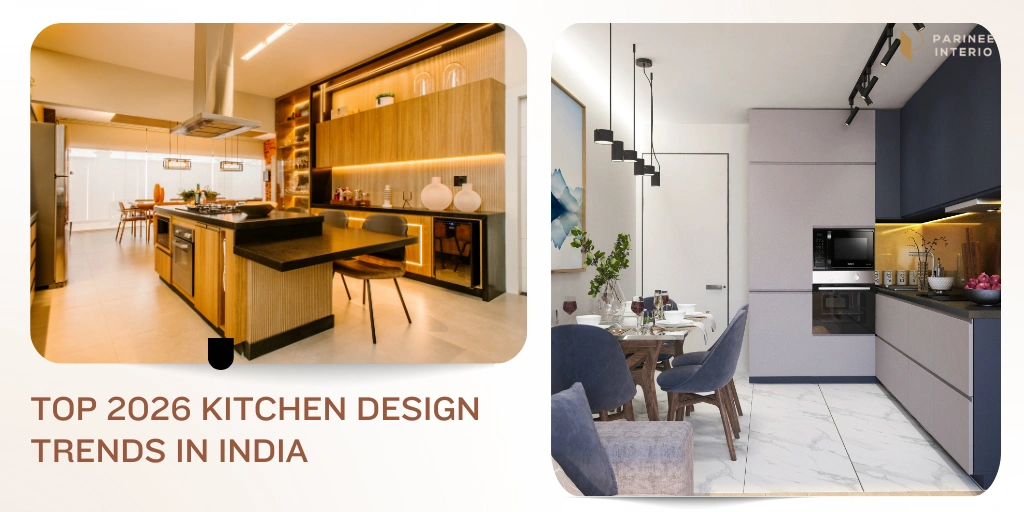
Top Modular Kitchen Design Trends for Indian Homes in 2026
Smart Storage That Uses Every Inch
Space is limited in Mumbai apartments. Storage planning is no longer optional.
Popular storage solutions in 2026:
- Tall units up to ceiling height
- Corner pull-out units instead of dead corners
- Tandem drawers for heavy utensils
- Bottle pull-outs beside the hob
These designs work especially well for modular kitchens for small apartments.
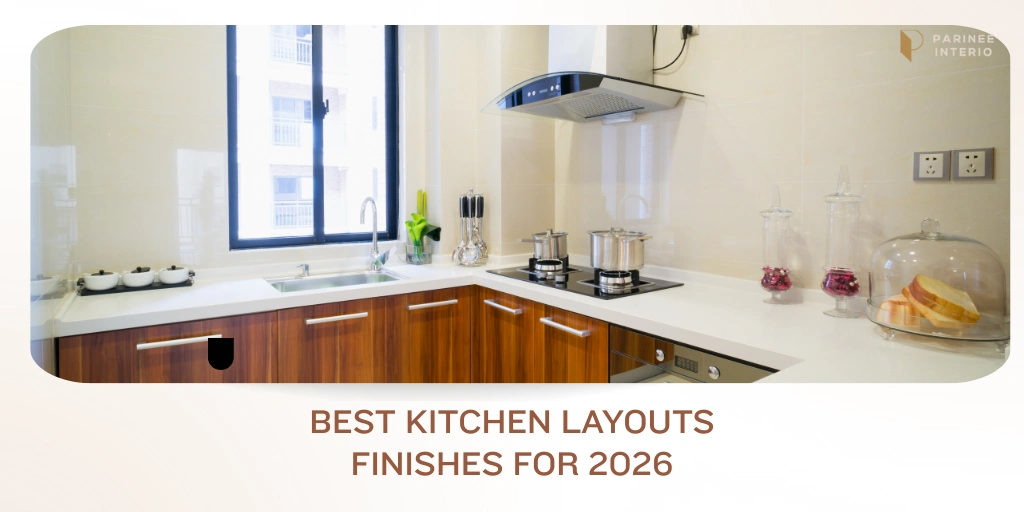
Easy-to-Clean Finishes (Matte, Anti-Fingerprint, Acrylic Mix)
High-gloss-only kitchens are slowly losing popularity.
Why homeowners are switching:
- Glossy surfaces show fingerprints and oil marks
- Matte finishes are calmer and easier to maintain
2026 preference mix:
- Matte cabinets for base units
- Acrylic or satin finish for overhead cabinets
- Anti-fingerprint laminates for daily-use zones
This balance is now common in modern kitchen design in India.
Earthy & Neutral Colour Palettes with Indian Accents
Colour trends in 2026 are calmer and warmer.
Popular colours:
- Beige and off-white
- Greige (grey + beige)
- Olive green
- Muted blue tones
These colours:
- Work well with Indian lighting
- Feel spacious in small kitchens
- Align with Vastu preferences
They are becoming a strong part of kitchen design ideas 2026.
Built-In Appliances for Cleaner Layouts
Built-in appliances help kitchens look organised without clutter.
Common built-ins in 2026:
- Built-in hob and chimney
- Microwave unit inside tall cabinets
- Dishwasher slots under counters
This creates visual calm and improves movement inside the kitchen.
Best Modular Kitchen Layouts for Indian Homes
Choosing the right layout matters more than choosing colours.
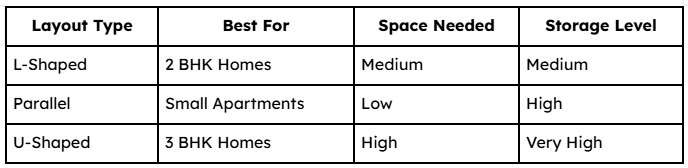
L-Shaped Modular Kitchen
Best suited for most 2 BHK flats.
Pros:
- Good corner usage
- Open movement area
- Budget-friendly
Limitations:
- Limited counter space for heavy cooking
Best for: Small to mid-sized families
Parallel (Galley) Kitchen
Very common in compact Mumbai apartments.
Why it works well:
- High storage on both sides
- Efficient work triangle
- Easy to organise zones
Best for: Narrow kitchens
U-Shaped Kitchen
Ideal for larger 3 BHK homes.
Advantages:
- Maximum counter and storage space
- Best for frequent cooking
- Multiple work zones
Needs: Sufficient width to avoid congestion
Layout Comparison Table
How Much Does a Modular Kitchen Cost in India in 2026?
Average Cost Range (Simple Explanation)
Approximate cost ranges:
- Entry-level: ₹1.8 – ₹3 lakh
- Mid-range: ₹3 – ₹5 lakh
- Premium: ₹5 lakh and above
Pricing depends on:
- Size of kitchen
- Material quality
- Storage complexity
- Hardware brands
This answers the common question: how much does a modular kitchen cost.
Cost Factors Most Homeowners Miss
Many people focus only on cabinet finish.
Important hidden factors:
- Soft-close hardware quality
- Carcass material (plywood vs MDF)
- Installation detailing
- Corner unit mechanisms
These directly affect modular kitchen cost in India over time.
Common Mistakes People Make While Choosing Kitchen Designs
- Choosing looks over daily use
- Not planning enough storage
- Ignoring future appliance needs
These mistakes are common across modular kitchen designs in India, especially for first-time homeowners.
How to Choose the Right Modular Kitchen Style for Your Home
Questions to Ask Yourself Before Finalizing Any Design
Use this checklist before locking your design:
- How often do you cook?
- How many people use the kitchen daily?
- Do you cook heavy Indian meals regularly?
- What is your comfortable budget range?
This clarity helps you select the best modular kitchen layout for your home.
Free Resource for Homeowners Planning a Kitchen in 2026
Free eBook: “2026 Kitchen Design Guide”
This guide includes:
- Layout recommendations for 2 & 3 BHK homes
- Material comparison made simple
- Budget planning tips
- Common mistakes to avoid
Who it’s useful for:
- New home buyers
- Renovating homeowners
- Confused decision-makers
Download the free 2026 Kitchen Design Guide to plan your kitchen with clarity.
What’s Next After Shortlisting Your Kitchen Style?
Once you shortlist designs, the real work begins:
- Accurate space measurement
- Storage zoning
- Material finalisation
- Smooth execution planning
When you’re ready to turn ideas into a working kitchen, expert planning makes all the difference.
FAQs
Smart storage, matte finishes, neutral colours, and built-in appliances are leading trends in 2026.
It depends on space. L-shaped works well for 2 BHK, parallel for compact homes, and U-shaped for larger 3 BHK kitchens.
In 2026, modular kitchen costs usually range between ₹1.8 lakh to ₹5 lakh, depending on size and materials.