A few years ago, sustainability in Indian homes mostly meant buying organic food or energy-efficient appliances.
Today, that thinking has quietly moved into how kitchens are designed.
Homeowners are asking better questions:
Will this material last?
Is it safe to live with every day?
Will I need to replace this again in five years?
At the same time, there’s confusion.
Many people want an eco-friendly kitchen but aren’t sure what actually makes a kitchen “green.”
Is it wood?
Is it a colour choice?
Is it expensive?
This guide breaks it down in a simple, usable way—what matters, what doesn’t, and how eco-friendly kitchen designs in India are realistically coming together in 2026.
What Does an Eco-Friendly Kitchen Really Mean?
More Than Just Using “Natural” Materials
An eco-friendly kitchen is not about going back to old methods or giving up comfort. It’s about making smarter choices.
In practical terms, a sustainable kitchen focuses on:
Materials that are responsibly sourced
Designs that last longer and don’t need frequent replacement
Finishes that are safer for indoor air
Planning that avoids unnecessary waste
That’s why sustainable kitchens are about long-term thinking, not sacrifice.
Why Indian Homes Are Slowly Moving Toward Green Kitchens
This shift didn’t happen overnight.
Indian homeowners are becoming more aware because:
Long-lasting materials save money over time
Health concerns around fumes and chemicals are increasing
People are renovating less often, but more thoughtfully
This mindset is shaping green kitchen design in India in a practical, steady way.
Eco-Friendly Kitchen Design Trends Gaining Popularity in India
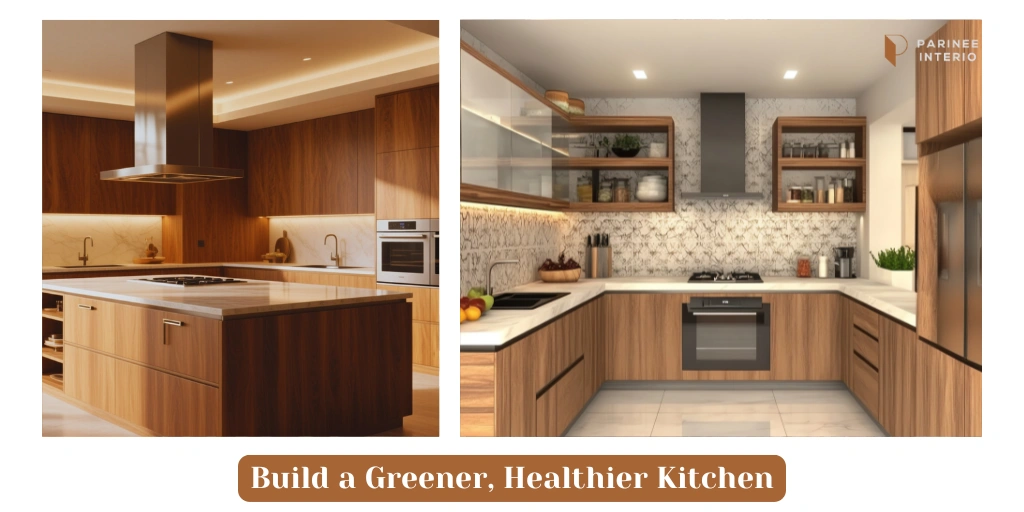
Sustainable Cabinet Materials
Cabinet structure plays a big role in sustainability.
Materials being explored more in 2026 include:
Bamboo boards for certain cabinet components
Recycled wood panels where strength allows
Responsibly sourced plywood with better durability
These eco-friendly kitchen materials reduce environmental impact without changing daily usage.
Low-Emission and Non-Toxic Finishes
This is an area many people overlook.
Low-VOC laminates, adhesives, and paints:
Release fewer harmful fumes
Improve indoor air quality
Feel safer for long hours spent in the kitchen
That’s why these sustainable kitchen materials are becoming more relevant, especially for families.
Durable Designs That Reduce Replacement
One of the most overlooked sustainability factors is lifespan.
A kitchen that lasts 15–20 years is more sustainable than one that needs replacement in 6–7 years.
Choosing durability over trend is a key principle of an eco-friendly modular kitchen.
How to Make a Kitchen More Sustainable (Without Major Changes)
Smart Material Choices That Lower Environmental Impact
You don’t need a full redesign to improve sustainability.
Small but effective choices include:
Selecting materials known for longevity
Avoiding finishes that chip or fade quickly
Planning cabinets that can be repaired, not replaced
This is the simplest way to learn how to make a kitchen sustainable.
Energy-Efficient Lighting and Appliances
Energy use adds up quietly.
A few practical steps:
LED lighting for task and ambient areas
Appliances chosen based on usage, not size
Avoiding over-installation of power-hungry gadgets
These changes are easy to plan and easy to live with.
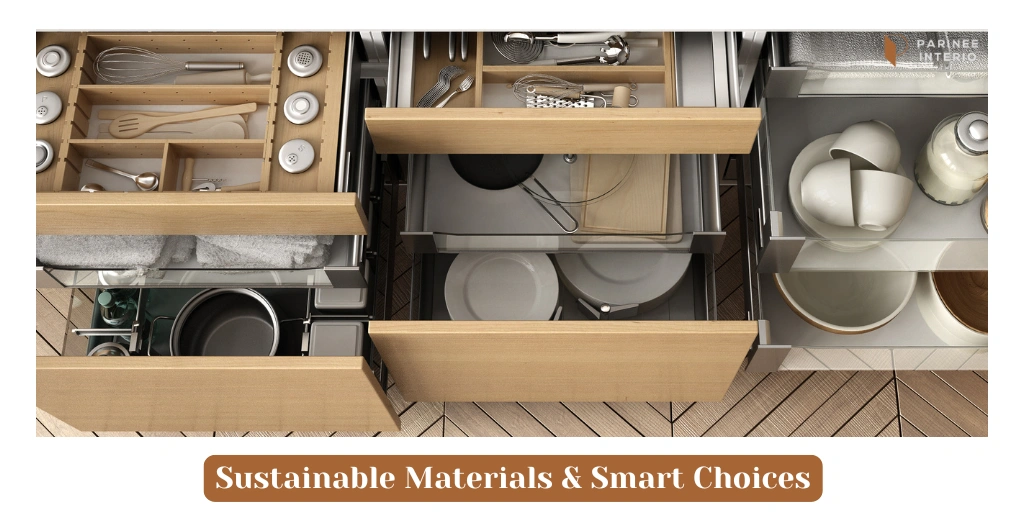
Reducing Waste Through Better Storage Planning
Sustainability isn’t only about materials—it’s also about habits.
Well-planned storage:
Makes pantry items visible
Reduces food waste
Prevents overbuying
This is one of the most practical sustainable kitchen ideas for Indian homes.
Benefits of Eco-Friendly Kitchen Design for Indian Homes
Healthier Living Environment
Lower emissions mean:
Better indoor air quality
Fewer irritants during long cooking hours
A safer space for daily family use
These are real benefits of eco-friendly kitchen design, not abstract ones.
Long-Term Cost and Maintenance Benefits
Durable kitchens:
Need fewer repairs
Age more gracefully
Reduce renovation frequency
Over time, this lowers both cost and stress.
Positive Environmental Impact
Every responsible choice helps:
Less resource consumption
Better material usage
Reduced waste over the kitchen’s lifespan
Small decisions add up meaningfully.
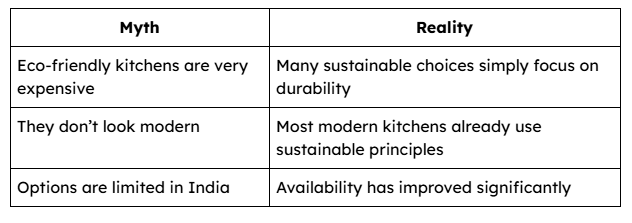
Common Myths About Sustainable Kitchen Design
These myths often stop people from exploring eco-friendly kitchen designs in India, even when the solutions are practical.
Is an Eco-Friendly Kitchen Right for You?
Who Benefits the Most
Green kitchens suit:
Long-term homeowners
Families concerned about health and air quality
People who prefer fewer renovations over time
Small Sustainable Steps Still Matter
You don’t need a perfectly “green” kitchen.
Even:
Better materials
Safer finishes
Smarter storage
Make a real difference. Sustainability grows through consistency, not perfection.
Start Your Green Kitchen Planning (Free Checklist)
Green Kitchen Checklist (Downloadable)
This checklist helps you:
Review materials and finishes
Plan lighting and storage thoughtfully
Make eco-conscious decisions step by step
Download the green kitchen checklist to plan a more sustainable kitchen without overcomplicating decisions.
Final Thoughts on Eco-Friendly Kitchen Design in India
Sustainable kitchens aren’t about doing everything at once. They’re about choosing what lasts longer, feels better to live with, and works responsibly.
A greener kitchen begins with choosing what lasts longer and works better.
 + 91 8108850334
info@parineeinterio.in
+ 91 8108850334
info@parineeinterio.in