+ 91 8108850334
info@parineeinterio.in
+ 91 8108850334
info@parineeinterio.in

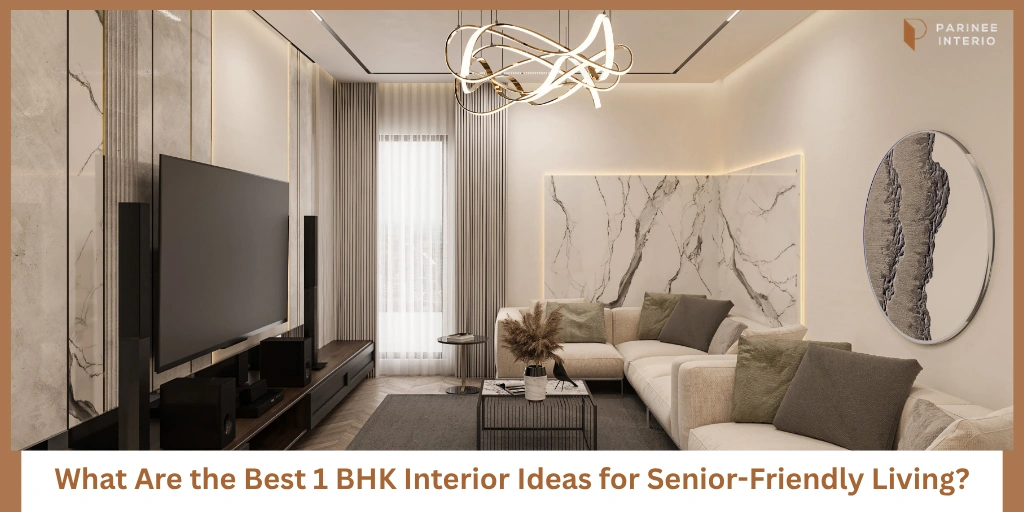
Many compact flats today are designed mainly for appearance, not daily comfort.
But when elderly parents, retirees, or senior couples live in a home, small design problems quickly become daily struggles. Slippery flooring, poor lighting, difficult storage access, and crowded furniture layouts can make movement uncomfortable and unsafe.
At the same time, most families do not want the home to feel clinical or hospital-like.
The good news is — a thoughtfully planned 1 BHK can feel both safe and elegant.
Senior-friendly interiors are not only about medical support. They are about smoother movement, easier daily living, and creating a calm, comfortable home environment.
What Seniors Usually Need in a 1 BHK Home
A senior-friendly home should reduce physical effort as much as possible.
Safer Movement Throughout the Flat
Compact apartments work better when movement feels easy and obstacle-free.
An accessible small home design should focus on:
- wider walking paths
- anti-slip flooring
- fewer sharp furniture edges
- clutter-free layouts
A safe apartment layout improves confidence and reduces fall risks significantly.
Better Comfort for Daily Activities
Simple daily activities should not feel physically tiring.
Practical elderly interiors usually include:
- supportive seating
- easier storage access
- reduced bending effort
- comfortable furniture heights
Good senior friendly furniture improves both comfort and independence.
Lighting and Visibility Become More Important with Age
Poor lighting often creates discomfort and safety concerns for seniors.
Senior friendly lighting should include:
- brighter pathways
- layered lighting
- glare reduction
- better night visibility
Even small lighting upgrades improve confidence while moving around the home.
FREE CONSULTATION
Free Senior-Friendly Layout Consultation for Your 1 BHK
What you’ll get:
- Elderly-friendly layout suggestions
- Safety improvement ideas
- Furniture placement guidance
- Accessibility planning recommendations
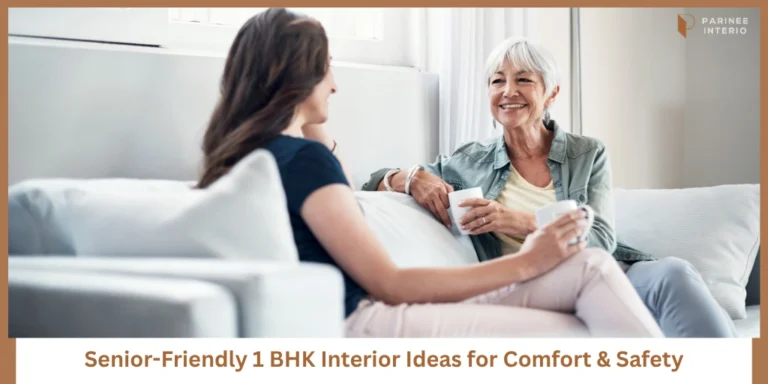
Best Senior-Friendly Interior Ideas for a 1 BHK
Good planning can make compact homes much safer and easier to live in.
Use Anti-Skid Flooring Throughout the Home
Safe flooring for elderly homeowners should always prioritize grip and stability.
Better flooring options include:
- matte tiles
- textured surfaces
- anti-skid bathroom flooring
Avoid glossy surfaces because they become slippery, especially after cleaning.
Prioritize Comfortable Bedroom Accessibility
An elder friendly bedroom design should support easy movement.
Important improvements include:
- proper bed height
- bedside lighting
- clutter-free walking space
- easy wardrobe access
Simple accessibility changes reduce daily strain significantly.
Design Bathrooms for Safety First
Bathrooms usually need the most attention in senior-friendly homes.
An elder friendly bathroom design should include:
- grab bars
- anti-skid tiles
- shower seating
- dry and wet area separation
A safe bathroom for seniors reduces accident risks heavily.
Improve Lighting Across All Spaces
Elderly home lighting ideas should focus on comfort and visibility.
Helpful additions include:
- motion sensor night lights
- layered lighting
- brighter corridors
- glare-free fixtures
Warm lighting also creates a calmer atmosphere.
Use Rounded Furniture Edges Wherever Possible
Sharp furniture corners increase injury risks in compact homes.
Rounded furniture edges improve:
- safer movement
- softer visual appearance
- everyday comfort
This is an important part of senior safe interiors.
Keep Storage Easily Accessible
Overhead storage becomes difficult with age.
Accessible storage ideas should focus on:
- mid-level cabinets
- pull-out drawers
- easy-grip handles
Elderly friendly storage reduces unnecessary stretching and bending.
Create Comfortable Seating Areas
Comfortable seating for seniors should provide:
- proper back support
- armrests
- easier standing support
Reading corners, balcony seating, or calm relaxation spaces also improve emotional comfort.
Best Colour and Material Choices for Senior-Friendly Homes
The right colours and materials help create calmer, safer interiors.
Warm Neutral Colours Improve Calmness
Warm neutral interiors like:
- beige
- warm white
- soft grey
- earthy tones
…help homes feel peaceful and visually softer.
Matte Finishes Reduce Glare
Matte finish interiors reduce harsh reflections and improve visual comfort.
This is especially useful for seniors sensitive to strong glare.
Soft Contrasts Improve Visibility
Accessible colour contrast helps seniors identify:
- furniture edges
- pathways
- storage areas
Too much visual blending sometimes reduces visibility.
Natural Textures Create Warmth Without Visual Clutter
Warm apartment interiors often use:
- wood textures
- soft fabrics
- linen curtains
- matte finishes
These materials create comfort without making the home feel visually busy.
Avoid Excessively Dark Flooring in Tight Spaces
Dark flooring may make compact homes feel smaller and visually heavier.
Lighter flooring shades usually improve spaciousness and visibility.
SENIOR-FRIENDLY CHECKLIST
Free Senior-Friendly Home Planning Checklist
Includes:
- Room-priority planner
- Safety improvement checklist
- Accessible furniture guide
- Bathroom safety recommendations
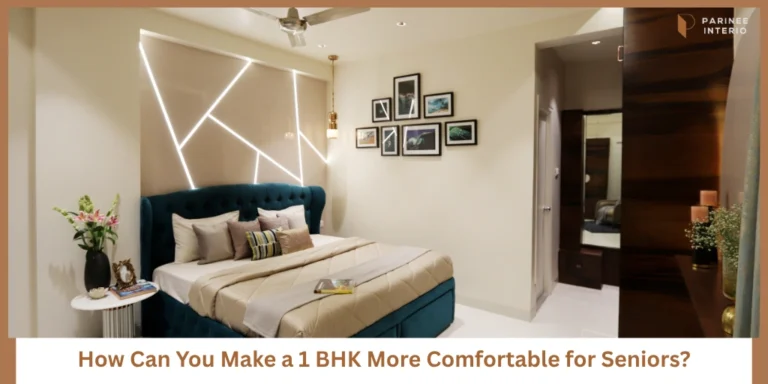
Smart Space Planning Tips for Elder-Friendly 1 BHK Homes
Simple layout improvements often create the biggest difference.
Keep Walking Paths Wide and Clutter-Free
Clear movement areas improve safety immediately.
Avoid Sharp Furniture Corners
Rounded edges reduce accidental injuries.
Use Sliding Doors Where Possible
Sliding doors improve accessibility in compact homes.
Place Frequently Used Items at Comfortable Heights
Daily-use items should remain easy to reach without stretching.
Improve Ventilation and Natural Light
Natural airflow and daylight improve comfort and emotional well-being.
Reduce Floor Level Changes Between Rooms
Uneven flooring levels increase tripping risks.
These elderly friendly layout improvements help homes feel more comfortable daily.
Common Mistakes People Make While Designing Homes for Seniors
Many senior home design mistakes happen because appearance gets prioritized over comfort.
Common mistakes include:
- glossy flooring
- low seating furniture
- overcrowded layouts
- poor night lighting
- inaccessible bathrooms
The best senior-friendly homes quietly improve independence, comfort, and confidence in daily living.
How to Balance Safety, Comfort, and Style Together
A safe home does not need to look clinical.
Safety Features Can Still Look Elegant
Modern grab bars, matte finishes, and soft lighting can blend beautifully into interiors.
Comfort Matters More Than Trendy Styling
Daily ease should always come before trend-based design choices.
Softer Lighting Improves Emotional Warmth
Warm layered lighting helps homes feel calmer and more welcoming.
Organized Layouts Reduce Daily Stress
Cleaner layouts improve movement and make homes easier to maintain.
Simple Design Usually Works Better Long Term
Minimal clutter and practical planning usually age much better over time.
Good practical apartment styling focuses on comfort first.
FREE LAYOUT SUGGESTION
Get a Free Senior-Friendly Layout Suggestion for Your 1 BHK
What you’ll get:
- Furniture placement guidance
- Accessibility improvement ideas
- Lighting recommendations
- Bathroom safety suggestions
Final Thoughts — Senior-Friendly Homes Should Feel Safe, Calm, and Easy to Live In
A thoughtfully planned home improves quality of life every single day.
Even compact apartments can feel:
- safe
- spacious
- comfortable
- emotionally calming
The most important thing is not expensive decor — it is thoughtful planning.
Because the best senior friendly home interior ideas quietly support independence, comfort, and peace of mind every day.
ACCESSIBLE HOME PLANNER
Free Accessible Home Setup Planner
Includes:
- Safety planning worksheet
- Room-by-room accessibility guide
- Furniture placement checklist
- Flooring comparison sheet
Frequently Asked Questions
A senior-friendly 1 BHK should prioritize safety, accessibility, comfortable movement, proper lighting, and clutter-free layouts.
Anti-skid matte flooring and textured tiles are usually safer options for elderly homeowners.
Grab bars, anti-skid tiles, shower seating, and dry-wet area separation are highly important.
Use wider movement paths, better lighting, accessible storage, and reduce unnecessary furniture clutter.
Supportive chairs with armrests, comfortable bed heights, rounded furniture edges, and accessible storage furniture work best.