+ 91 8108850334
info@parineeinterio.in
+ 91 8108850334
info@parineeinterio.in

Ask homeowners about their biggest interior regret five years after moving into a new home.
A surprising number give the same answer.
“We didn’t plan enough storage.”
Not the paint color.
Not the sofa.
Not the lighting.
Storage.
Because a home that feels spacious on possession day can feel crowded surprisingly quickly once real life moves in.
Children grow.
Wardrobes fill up.
Kitchen items multiply.
Festival decorations need a place.
Suitcases need a place.
Work-from-home equipment needs a place.
And suddenly, every available shelf disappears.
This is why storage planning is one of the most important decisions you will make before starting interiors.
The challenge?
Most families plan storage for today’s belongings.
Very few plan for the next five years.
This guide will help you estimate how much storage a family of four actually needs and avoid one of the most common homeowner regrets.
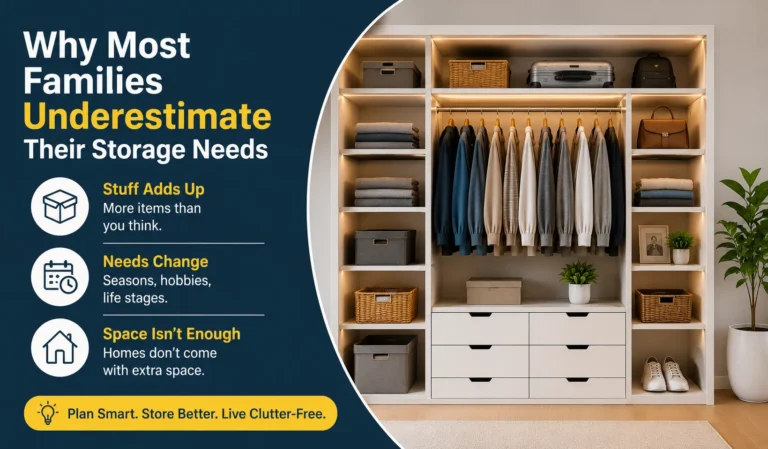
Why Most Families Underestimate Their Storage Needs
Storage shortages rarely happen because families own too many things.
They happen because homes are planned around incomplete assumptions.
Why Most Families Plan Storage for Today’s Belongings Instead of Tomorrow’s
When homeowners estimate storage requirements, they usually look around their current home.
That sounds logical.
The problem is that life doesn’t stand still.
A family moving into a new home often acquires:
- New furniture
- New appliances
- New household items
- Additional clothing
- Children’s belongings
The storage requirement grows along with the lifestyle.
The Things That Quietly Enter Your Home Every Year
Many purchases happen gradually.
Examples include:
- Kitchen gadgets
- School supplies
- Sports equipment
- Travel accessories
- Home décor
- Household essentials
Individually they seem small.
Together they consume significant storage space.
Why Children’s Storage Requirements Rarely Stay the Same
A toddler’s storage needs are very different from a teenager’s.
Over time families accumulate:
- Toys
- Books
- School projects
- Sports equipment
- Electronic devices
- Study materials
Children’s storage usually expands every year.
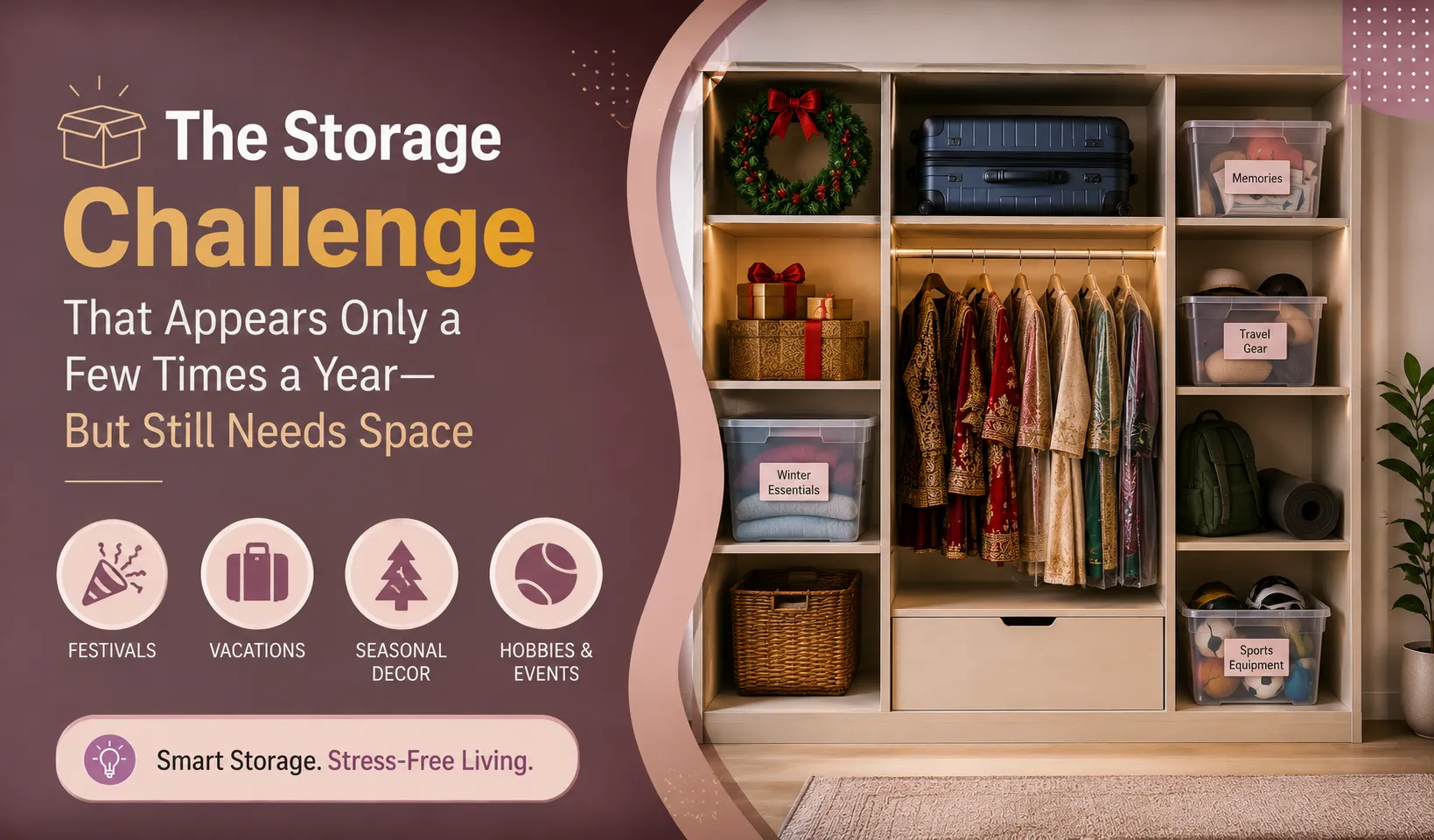
The Storage Challenge That Appears Only a Few Times a Year—But Still Needs Space
Many storage problems come from items that aren’t used daily.
Examples include:
- Festival decorations
- Winter clothing
- Travel luggage
- Extra bedding
- Seasonal appliances
These items occupy valuable space despite limited use.
A Reality Most Families Discover Too Late
Your home doesn’t become cluttered because you own too much. It becomes cluttered because you planned for too little.
Not Sure How Much Storage Your Family Actually Needs?
Many homeowners either underestimate storage requirements or waste valuable space on unnecessary storage. Get a personalized evaluation based on your household size, lifestyle, daily habits, and future family plans.
Family Storage Requirement Assessment
Wardrobe & Bedroom Storage Planning
Kitchen Storage Recommendations
Future Family Needs Planning
Space Optimization Advice
Personalized Storage Strategy
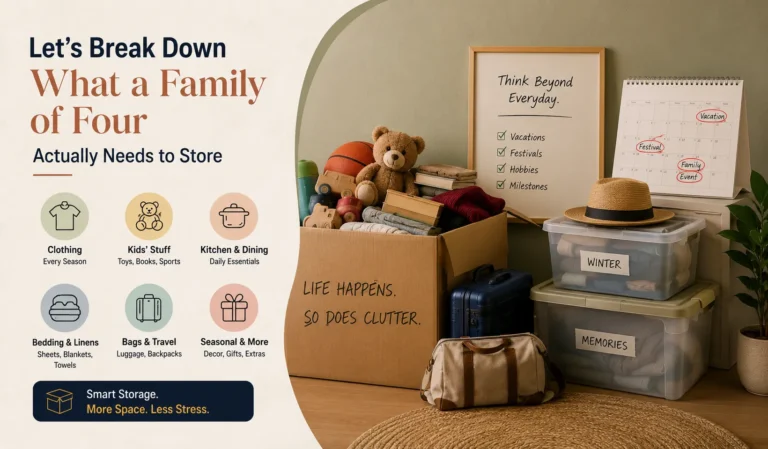
Let’s Break Down What a Family of Four Actually Needs to Store
Storage becomes easier to plan when you break it into categories.
Typical Storage Categories
| Storage Category | Examples |
|---|---|
| Clothing | Daily Wear, Formal Wear, Seasonal Wear |
| Children’s Items | Toys, Books, School Supplies |
| Kitchen Items | Appliances, Groceries, Utensils |
| Household Supplies | Cleaning Products, Tools |
| Travel Items | Suitcases, Backpacks |
| Documents | Certificates, Files, Records |
| Sentimental Items | Photos, Keepsakes, Gifts |
Typical Storage Distribution for a Family of Four
| Category | Typical Share of Storage |
|---|---|
| Clothing | 35% |
| Kitchen Items | 20% |
| Children’s Items | 15% |
| Household Supplies | 10% |
| Seasonal Items | 10% |
| Travel Items | 5% |
| Documents & Miscellaneous | 5% |
What Most Homeowners Notice
Wardrobes and kitchen storage usually consume more space than expected.
That is why these areas deserve special attention during planning.
Storage Planning Room by Room
Storage should be planned based on how each room functions.
Why Most Master Wardrobes Fill Up Faster Than Expected
Many homeowners calculate wardrobe size based on current clothing.
That approach often falls short.
A master wardrobe usually needs space for:
- Daily wear
- Formal clothing
- Seasonal clothing
- Accessories
- Footwear
- Bedding
Future purchases also need consideration.
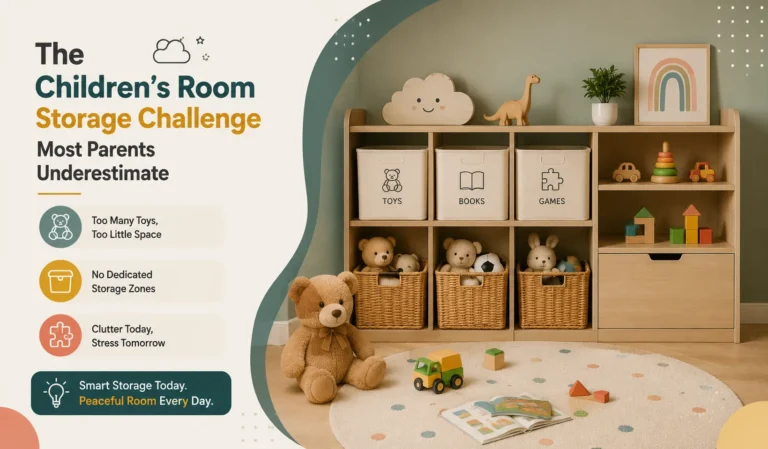
The Children’s Room Storage Challenge Most Parents Underestimate
Children rarely need less storage over time.
A typical room may eventually need space for:
- Toys
- Books
- School supplies
- Art materials
- Sports equipment
- Electronic devices
A flexible storage strategy becomes important.
The Everyday Items That Usually End Up in the Living Room
Living rooms often become accidental storage zones.
Examples include:
- Documents
- Chargers
- Electronics
- Remote controls
- Daily-use items
Without dedicated storage, clutter appears quickly.
Why Kitchen Storage Always Feels Adequate Until You Start Living There
Most kitchens look spacious before move-in.
Reality changes once families add:
- Groceries
- Appliances
- Containers
- Cookware
- Serving items
Many homeowners wish they had planned more kitchen storage from the beginning.
The Storage Areas Most Homeowners Forget
This is where many storage problems begin.
Luggage Storage
Suitcases occupy more space than many families expect.
Festival Decorations
Used occasionally.
Stored all year.
Extra Bedding
Essential for guests and seasonal changes.
Cleaning Equipment
Vacuum cleaners, mops, buckets, and supplies require dedicated space.
Children’s Future Items
School requirements increase every year.
Work-From-Home Equipment
Printers.
Documents.
Devices.
Accessories.
Sports and Hobby Equipment
Bicycles.
Fitness equipment.
Musical instruments.
Sports gear.
What We Notice Across Family Homes
The biggest storage problems usually come from things you don’t use every day.
Are You Missing Hidden Storage Opportunities in Your Home?
Before wardrobes, cabinets, and furniture layouts are finalized, discover where additional storage and space-saving solutions can be integrated into your home. Small planning decisions now can significantly improve functionality later.
Hidden Storage Opportunity Assessment
Wardrobe & Cabinet Planning Advice
Space Utilization Recommendations
Multi-Functional Storage Solutions
Family Lifestyle-Based Planning
Personalized Storage Strategy
How Storage Needs Change Over the Next 5 Years
Most storage problems don’t exist on move-in day.
They develop gradually.
Year 1: Initial Setup
Storage feels sufficient.
Everything appears organized.
Year 2–3: Household Growth
Families typically acquire:
- More appliances
- More clothing
- More household items
Storage begins feeling tighter.
Year 3–5: Lifestyle Expansion
Common additions include:
- Children’s study materials
- Additional electronics
- More travel accessories
- Hobby equipment
Storage pressure increases significantly.
Why Most Storage Problems Don’t Exist on Move-In Day
Many homeowners judge storage success too early.
The real test comes years later.
Good storage planning accounts for growth before it happens.
Signs You’re Planning Too Little Storage
Use this checklist.
The Red Flags That Usually Lead to Future Storage Frustration
□ No luggage storage planned
□ No utility storage planned
□ Wardrobes fit only current clothing
□ No seasonal storage
□ No document storage
□ No work-from-home storage
□ No guest bedding storage
□ No future storage allowance
□ No children’s growth allowance
□ No hobby or sports storage
If several boxes apply to your home, storage requirements may need review.
Is It Possible to Have Too Much Storage?
Many homeowners worry about overdoing storage.
In reality, poor storage planning creates bigger problems than excess storage.
| Myth | Reality |
|---|---|
| More Storage Wastes Space | Poorly Planned Storage Wastes Space |
| Open Spaces Are Always Better | Balanced Storage Improves Usability |
| Minimal Storage Feels Larger | Clutter Makes Homes Feel Smaller |
| Storage Reduces Aesthetics | Smart Storage Improves Organization |
The Difference Between Useful Storage and Wasted Storage
Useful storage:
- Solves a real need
- Improves organization
- Reduces clutter
Wasted storage:
- Occupies valuable space
- Serves no practical purpose
- Creates maintenance challenges
The goal is balance.
Not maximum cabinetry.
Not minimum cabinetry.
The right amount of storage.
Storage Planning Strategies Smart Families Use
Families who rarely struggle with clutter usually follow similar principles.
Why Storage Decisions Should Come Before Furniture Decisions
Storage affects layouts.
Layouts affect furniture.
The sequence matters.
The Space Above Eye Level Most Homes Never Use Properly
Vertical storage opportunities often remain unused.
Lofts and upper storage zones can provide valuable capacity.
How Smart Families Reduce Clutter Without Hiding Everything
A mix of display and concealed storage usually works best.
Why Empty Storage Space Today Can Be Valuable Tomorrow
Unused storage is not wasted storage.
It often becomes valuable later.
The Storage Opportunities Most Families Never Consider
Examples include:
- Beds with storage
- Utility cabinets
- Loft storage
- Entry storage
- Multi-purpose furniture
Will Your Home Have Enough Storage for the Years Ahead?
Review your family’s belongings, lifestyle habits, future plans, and home layout to identify the right storage strategy before interior work begins. Plan smarter now and avoid storage shortages after moving in.
Family Storage Requirement Assessment
Home Layout & Storage Review
Wardrobe & Cabinet Planning Guidance
Future Family Needs Planning
Hidden Storage Opportunity Recommendations
Personalized Storage Roadmap
What Most Families Wish They Had Stored Better
This is where experience becomes valuable.
Across many family homes, the same regrets appear repeatedly.
School Supplies and Children’s Items
These grow faster than expected.
Luggage and Travel Accessories
Often forgotten during planning.
Festival Decorations
Need dedicated space despite limited use.
Extra Bedding and Guest Items
Storage shortages become obvious during family visits.
Household Consumables
Bulk purchases require organization.
Future Purchases
Most families underestimate how much they will acquire over the next five years.
A Common Observation
Most storage regrets are not about wardrobes.
They are about everything outside the wardrobe.
Why This Exercise Prevents One of the Most Expensive Interior Mistakes
Most homeowners know what they own today.
Few estimate what they will own five years from now.
This worksheet helps bridge that gap.
Before You Finalize Wardrobes, Kitchens, and Furniture Layouts
A beautiful home catches attention.
A well-organized home makes everyday life easier.
And the difference between the two often comes down to storage.
Most families don’t regret having too much storage.
They regret running out of it.
That’s why storage planning should happen before wardrobes are designed, before furniture is purchased, and before layouts are finalized.
Because the goal isn’t to create more cabinets.
The goal is to create a home that continues to work well for your family five years from now—not just on move-in day.
Do You Know How Much Storage Your Family Will Actually Need?
Review your family size, lifestyle, storage habits, future plans, and floor plan to determine exactly how much storage your home needs before interior work begins. Build storage around real life, not assumptions.
Family Size & Lifestyle Assessment
Storage Habit Evaluation
Floor Plan & Space Review
Future Family Growth Planning
Wardrobe, Kitchen & Utility Storage Guidance
Personalized Storage Requirement Report
How much wardrobe space does a family of four need?
The answer depends on lifestyle, clothing habits, and family composition, but most families require significantly more wardrobe space than they initially estimate.
What storage should be prioritized first?
Kitchen storage, bedroom wardrobes, utility storage, and seasonal storage should usually receive priority.
How much kitchen storage is enough?
Enough storage should accommodate daily use items, groceries, appliances, and future additions.
Should I plan storage for future needs?
Yes. Future requirements often become the biggest source of storage shortages.
What are the most forgotten storage areas?
Luggage, festival decorations, utility supplies, guest bedding, and children’s future belongings.
Can too much storage make a home feel smaller?
Poorly planned storage can. Well-designed storage usually improves organization and functionality.
When should storage planning happen during interior design?
Storage planning should happen before wardrobes, furniture layouts, and room designs are finalized.
How much storage should a 2 BHK family home have?
The answer varies, but families generally benefit from more storage than they initially believe they need.
Are lofts still useful in modern homes?
Yes. Lofts remain valuable for seasonal and infrequently used items.
What is the biggest storage mistake families make?
Planning storage only for current belongings and ignoring future growth.
Should storage be added room by room?
Storage should be planned for the entire home first and then distributed across rooms.
Why do homeowners regret not planning enough storage?
Because storage affects daily comfort, organization, and clutter control for years after move-in.