+ 91 8108850334
info@parineeinterio.in
+ 91 8108850334
info@parineeinterio.in


Most people design their homes for the way life looks today.
Very few people design for the way life may look 10 years from now.
That’s why many families eventually face a difficult realization.
The home that once felt comfortable now creates daily challenges for aging parents.
A small step becomes a fall risk.
A bathroom becomes a concern.
A poorly placed switch becomes frustrating.
A storage cabinet becomes difficult to reach.
The good news?
A senior-friendly home doesn’t need to look clinical.
It doesn’t need to resemble a hospital.
Good planning can make a home safer, more comfortable, and easier to use while still looking warm, modern, and stylish.
The goal is simple:
Help parents live safely, comfortably, and independently for as long as possible.
And the best time to make those decisions is before they become urgent.
The Biggest Mistake Families Make When Designing for Elderly Parents
Many families wait until a problem appears before making changes.
Unfortunately, that’s often when modifications become more expensive and disruptive.
Why Today’s Health Doesn’t Always Reflect Tomorrow’s Needs
Parents may be active and independent today.
But mobility, balance, eyesight, and strength can change gradually over time.
The challenge is that homes designed only for current needs often require significant modifications later.
Why Small Difficulties Often Become Daily Frustrations
Something as simple as:
- A high storage cabinet
- A slippery bathroom floor
- A narrow passage
- Poor lighting
may seem minor today.
Over time, these small inconveniences can become major challenges.
Why Future Planning Usually Costs Less Than Future Renovation
Many safety upgrades are easier and more affordable when included during interior planning.
Retrofitting later often means:
- Additional labor
- Demolition work
- Material replacement
- Temporary inconvenience
A Thought Worth Remembering
The best time to create a senior-friendly home is before anyone actually needs one.
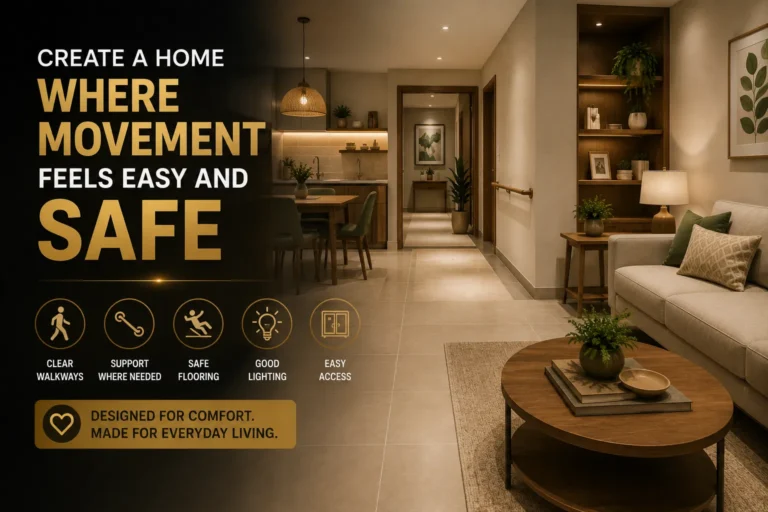
Make Your Home Safer and More Comfortable for Elderly Parents
Get expert recommendations on improving safety, comfort, and accessibility for elderly family members—without requiring major structural changes. Identify simple, practical improvements that make everyday living easier and safer.
Safety Risk Assessment
Mobility-Friendly Layout Review
Bathroom & Kitchen Safety Check
Fall-Prevention Recommendations
Lighting & Accessibility Improvements
Personalized Comfort Upgrades
Step 1: Design for Safe Movement Throughout the Home
The first priority should always be safe movement.
Many accidents happen not because of major hazards, but because of everyday obstacles.
Why Narrow Pathways Create Daily Challenges
Parents should be able to move comfortably without squeezing through furniture.
Ideal pathways should allow:
- Easy walking
- Comfortable turning
- Future mobility support if needed
The Obstacles That Often Create Unnecessary Risks
Common examples include:
- Decorative stools
- Side tables
- Loose rugs
- Storage baskets
These may look harmless but can become tripping hazards.
Why Sharp Furniture Edges Become More Problematic Over Time
Coffee tables.
TV units.
Dining tables.
Sharp edges increase injury risk during accidental bumps or loss of balance.
Rounded edges often create a safer environment.
Why Frequently Used Items Should Stay Within Easy Reach
Everyday items should not require:
- Climbing
- Stretching
- Excessive bending
Convenience and safety often go hand in hand.
The Areas Where Clutter Creates the Biggest Problems
Common clutter zones include:
- Entryways
- Bedrooms
- Living rooms
- Passages
Clear pathways improve both safety and comfort.
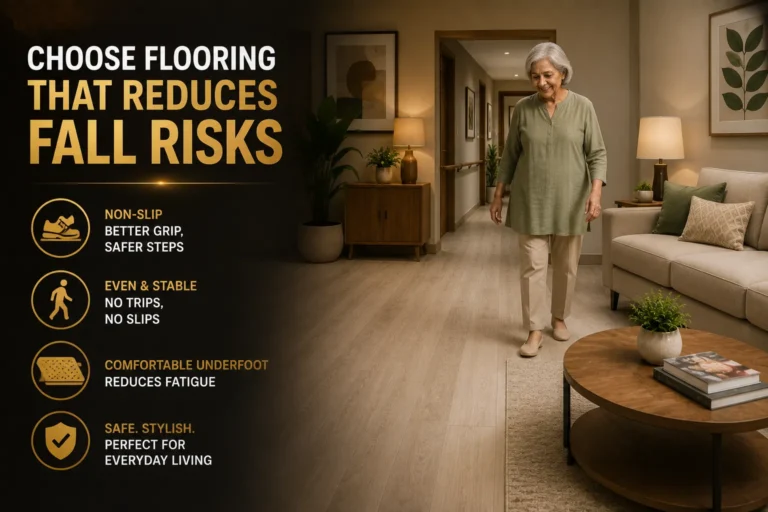
Step 2: Choose Flooring That Reduces Fall Risks
Falls remain one of the most common causes of injury among older adults.
Flooring plays a major role.
Flooring Options and Their Senior-Friendly Rating
Anti-Skid Tiles
High
Matte Finish Tiles
High
Textured Flooring
High
Glossy Tiles
Low
Uneven Flooring
Low
Why Falls Are One of the Biggest Home Safety Concerns
A fall can lead to:
- Fractures
- Reduced mobility
- Longer recovery periods
- Loss of confidence
This makes flooring one of the most important decisions in the home.
Flooring Mistakes Many Families Realize Too Late
Common mistakes include:
- Highly polished surfaces
- Uneven floor levels
- Decorative floor transitions
- Slippery bathroom tiles
Style should never come at the expense of safety.
Step 3: Prioritize Bathroom Safety Before Any Other Room
If you can improve only one area of the home, start with the bathroom.
Most home accidents involving seniors occur here.
Why Bathroom Flooring Deserves Special Attention
Wet surfaces increase slip risks.
Anti-slip flooring should be a priority.
The Small Addition That Creates Major Safety Benefits
Grab bars provide support during:
- Standing
- Sitting
- Shower use
They significantly improve confidence and safety.
Why Fixture Placement Matters More Than Many Families Realize
Taps.
Shower controls.
Hand showers.
All should remain easy to reach.
The Shower Design That Supports Greater Independence
Barrier-free showers reduce tripping risks.
Simple access often improves confidence.
Why Good Drainage Improves Safety
Water accumulation increases fall risks.
Proper drainage helps keep surfaces safer.
Expert Advice
If you only upgrade one room for senior safety, start with the bathroom.
Step 4: Create a Bedroom That Supports Comfort and Independence
Bedrooms should feel safe during both day and night.
Why Bed Height Matters More Than Most Families Expect
Beds that are too high or too low make sitting and standing difficult.
Comfortable access should be the goal.
The Storage Locations That Reduce Daily Effort
Frequently used items should stay:
- Within arm’s reach
- At comfortable heights
- Easy to access
Why Night Lighting Prevents Many Accidents
Many falls happen during nighttime bathroom visits.
Soft night lighting improves visibility without disturbing sleep.
The Importance of Emergency Reach Zones
Phones.
Emergency contacts.
Medicines.
Water bottles.
These should remain easily accessible.
Why Switch Placement Should Feel Natural
Parents should not need to walk across a dark room to turn on a light.
Improve Safety Where It Matters Most in Your Home
Review the two most important areas of your home—bedroom and bathroom—and identify practical upgrades that improve safety, accessibility, and daily comfort without major renovation work.
Slip & Fall Risk Assessment
Bathroom Accessibility Review
Bedroom Layout Safety Check
Grab Bar & Support Recommendations
Lighting & Visibility Improvements
Daily Comfort Enhancements

Step 5: Improve Lighting Throughout the Home
Lighting is one of the most overlooked safety features in home design.
Why Entry Areas Need Better Visibility
Good lighting reduces trip hazards and improves confidence when entering or leaving the home.
Passages Should Never Feel Dark
Corridors connect multiple spaces.
Visibility should remain consistent throughout.
Why Bathroom Lighting Deserves Special Attention
Good lighting improves visibility around:
- Wet surfaces
- Fixtures
- Storage areas
Bedrooms Need Both Comfort and Safety
Lighting should support:
- Reading
- Dressing
- Nighttime movement
The Lighting Upgrade Many Families Wish They Had Added Earlier
Night navigation lighting helps seniors move safely without disturbing sleep.
Why Shadows Create Hidden Risks
Dark corners and uneven lighting make depth perception more difficult.
Step 6: Make Storage Easy to Reach
Storage should support independence.
Not create obstacles.
Keep Everyday Essentials Within Comfortable Reach
Frequently used items should remain accessible without stretching or climbing.
Why High Storage Cabinets Often Become Useless
Many seniors avoid using cabinets that require ladders or stools.
The Daily Movements That Should Require Less Bending
Repeated bending can create discomfort and balance issues.
Storage should reduce unnecessary effort.
Why Logical Organization Matters
Simple organization makes daily routines easier and reduces frustration.
Step 7: Create a Kitchen That Supports Independence
Many seniors enjoy maintaining daily routines.
The kitchen should support that independence.
Counter Heights Should Feel Comfortable
Work surfaces should reduce unnecessary strain.
Storage Should Support Everyday Use
Commonly used items should remain easy to access.
Appliance Access Should Feel Simple
Microwaves.
Ovens.
Refrigerators.
These should not require awkward movement.
Better Lighting Creates a Safer Kitchen
Food preparation requires clear visibility.
Why Open Movement Areas Matter
The kitchen should allow easy movement without obstacles.
Step 8: Prepare the Home for Future Mobility Needs
The smartest senior-friendly homes don’t just solve today’s problems.
They adapt to tomorrow’s needs.
Why Extra Clearance Space Creates Future Flexibility
Wider clearances help accommodate changing mobility requirements.
The Advantage of Barrier-Free Design
Reducing unnecessary level changes creates safer movement.
Why Flexible Layouts Age Better
Furniture layouts should allow future adjustments without major renovation.
The Small Decisions That Simplify Future Modifications
Strategic planning today can prevent expensive changes later.
A Thought Worth Considering
A home that adapts is often better than a home that needs renovation.
Create a Safe, Comfortable Home for Your Parents
Discuss your parents’ lifestyle, mobility, daily routines, and future requirements to create a practical long-term interior plan. Get guidance on making your home safer, easier to navigate, and more comfortable without major structural changes.
Mobility & Accessibility Review
Safety Risk Identification
Bathroom & Bedroom Optimization
Daily Routine Mapping
Future-Ready Space Planning
Personalized Comfort Strategy
Interior Design Mistakes That Make Homes Difficult for Seniors
Many homes become challenging because of avoidable design decisions.
The Flooring Choice That Looks Beautiful but Creates Risk
Glossy flooring often becomes slippery, especially when wet.
Why Poor Lighting Creates Daily Frustration
Insufficient lighting affects comfort and safety.
The Storage Decision Many Families Regret
High cabinets often become difficult to use.
Why Cluttered Walkways Create Unnecessary Hazards
Even small obstacles can increase fall risks.
Furniture Edges That Cause More Injuries Than Expected
Sharp corners deserve attention.
Why Complicated Layouts Create Daily Challenges
Simple navigation improves comfort and independence.
The Future Needs Many Families Forget to Consider
Planning only for today’s requirements often creates problems later.
A Practical Roadmap for Creating a Senior-Friendly Home
If you’re unsure where to begin, follow this sequence.
Phase 1: Understand Daily Routines
Observe how your parents use the home.
Phase 2: Address Safety Risks
Focus on flooring, bathrooms, lighting, and pathways.
Phase 3: Improve Accessibility
Make storage, switches, and fixtures easier to access.
Phase 4: Increase Comfort
Enhance convenience and daily usability.
Phase 5: Create Flexibility for Future Needs
Allow the home to adapt without major renovations.
Phase 6: Review the Home Regularly
Needs change over time.
Periodic reviews help maintain comfort and safety.
Create a Safe, Comfortable Home for Your Parents
Discuss your parents’ lifestyle, mobility, daily routines, and future requirements to create a practical long-term interior plan. Get guidance on making your home safer, easier to navigate, and more comfortable without major structural changes.
Mobility & Accessibility Review
Safety Risk Identification
Bathroom & Bedroom Optimization
Daily Routine Mapping
Future-Ready Space Planning
Personalized Comfort Strategy
The Real Goal Isn’t Safety Alone
When families start planning for elderly parents, they often focus only on preventing accidents.
That’s important.
But the bigger goal is helping parents maintain independence, confidence, and dignity.
A well-designed home allows them to move comfortably.
Use spaces confidently.
Maintain daily routines.
And continue living life on their own terms.
The most successful homes aren’t designed only for the people who live there today.
They’re designed to support the people they will become tomorrow.
How can I make my home safer for elderly parents?
Start with bathroom safety, anti-slip flooring, better lighting, clear pathways, and easy-access storage.
What flooring is best for senior citizens?
Anti-skid tiles, matte-finish flooring, and textured surfaces are generally safer options.
What changes should I make in the bathroom?
Consider anti-slip flooring, grab bars, barrier-free showers, better lighting, and improved drainage.
How do I design a senior-friendly bedroom?
Focus on comfortable bed height, night lighting, accessible storage, and easy-to-reach switches.
How much accessibility planning is enough?
Plan not only for current requirements but also for potential future mobility needs.
Should I plan for future mobility issues?
Yes. Early planning is usually simpler and more cost-effective than later modifications.
What are the most important safety upgrades?
Bathroom improvements, anti-slip flooring, better lighting, and clear movement pathways are usually the most impactful.
Are grab bars necessary if parents are still active?
Many families install them proactively because they provide safety without major expense.
Should seniors have a bedroom on the entry level?
If possible, minimizing stairs often improves convenience and safety.
What lighting works best for elderly parents?
Even, glare-free lighting with minimal shadows generally works best.
How wide should pathways be inside the home?
Pathways should allow comfortable movement without obstacles or tight turns.
Can a senior-friendly home still look stylish?
Absolutely. Good senior-friendly design focuses on functionality without compromising aesthetics.