+ 91 8108850334
info@parineeinterio.in
+ 91 8108850334
info@parineeinterio.in

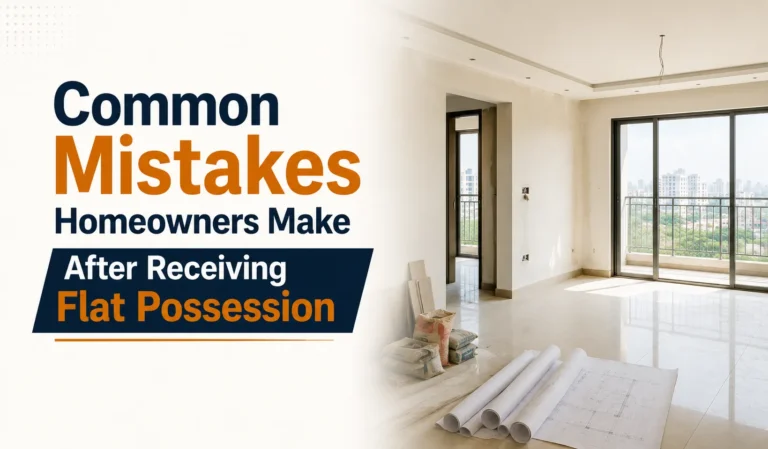
Common Mistakes Homeowners Make After Receiving Flat Possession
The day you receive your flat keys feels like the finish line.
Years of saving.
A home loan.
Builder follow-ups.
Site visits.
Paperwork.
Waiting.
And finally, the keys are in your hands.
It’s an emotional moment.
But here’s something we’ve noticed after working with hundreds of homeowners.
Many of the most expensive mistakes don’t happen before possession.
They happen during the first few weeks after possession.
Some homeowners spend lakhs on work they didn’t actually need.
Some delay their interiors by months.
Some move in too early and end up living inside an active construction site.
Others discover storage problems only after every wardrobe is already installed.
The challenge is simple.
Most homeowners receive possession only once or twice in their lives.
So they don’t always know what should happen first.
This guide will help you avoid the mistakes we repeatedly see new homeowners make after receiving possession of their flat.
Because a few smart decisions now can save a significant amount of money, stress, and regret later.
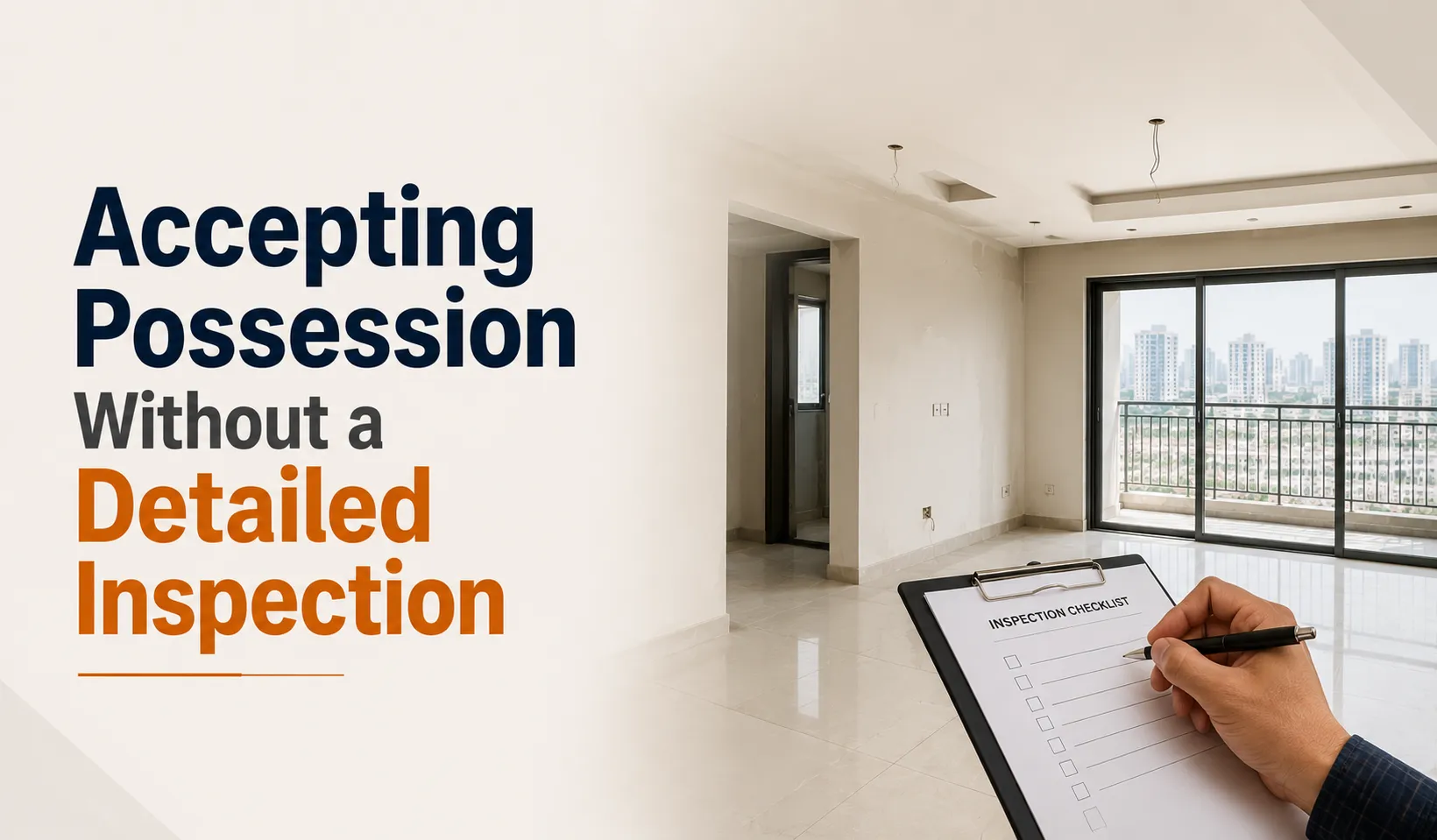
Mistake #1: Accepting Possession Without a Detailed Inspection
This is easily one of the biggest mistakes homeowners make.
Many buyers receive the keys, walk through the apartment, take a few photos, and assume everything is fine.
That assumption can become expensive.
What Most Buyers Miss During Their First Inspection
Common issues include:
- Hollow floor tiles
- Hairline wall cracks
- Plumbing leakages
- Uneven flooring
- Window alignment issues
- Improper sealing
- Balcony drainage problems
- Faulty switches
Many of these problems are easier to identify before you formally accept possession.
Why Small Defects Become Bigger Problems Later
A minor plumbing issue may seem insignificant today.
After wardrobes, false ceilings, and furniture arrive, the same issue becomes much harder to fix.
That is why experienced homeowners spend time inspecting before celebrating.
Possession Inspection Checklist
| Area | What To Check |
|---|---|
| Walls | Cracks, Dampness, Uneven Finish |
| Flooring | Hollow Tiles, Level Differences |
| Doors | Alignment, Locks, Smooth Movement |
| Windows | Sealing, Locks, Sliding Function |
| Electrical | Switches, Sockets, AC Points |
| Plumbing | Water Pressure, Drainage, Leakage |
| Balcony | Water Flow, Railing Condition |
Many defects are easiest to fix before you officially accept the flat.
Not Sure If Your Flat Is Properly Inspected Before Interiors?
Not sure whether you’ve inspected everything properly? Get expert guidance on what to inspect, verify, and document before moving forward with interiors to avoid costly mistakes later.
Pre-Interior Inspection Checklist
Defect & Snag Identification Guidance
Floor Plan & Measurement Review
Electrical & Plumbing Verification Tips
Documentation & Reporting Guidance
Personalized Readiness Assessment
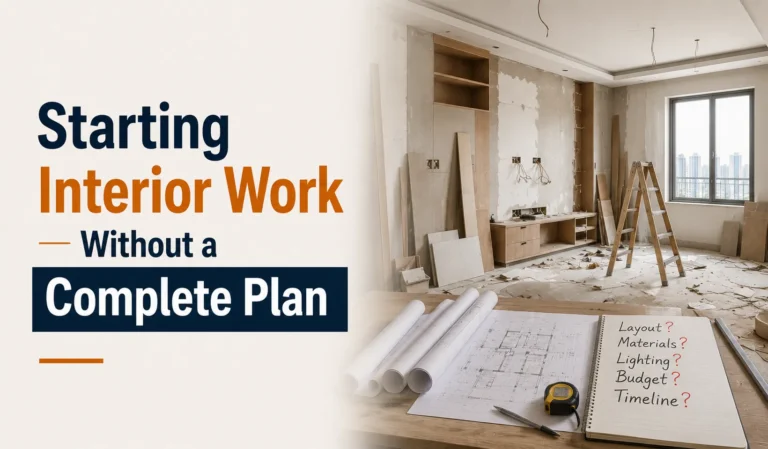
Mistake #2: Starting Interior Work Without a Complete Plan
Excitement often creates urgency.
Urgency often creates mistakes.
Many homeowners start interiors room by room.
The living room first.
Then the bedroom.
Then the kitchen.
Then storage.
What seems practical often creates confusion later.
What Usually Happens When Interior Decisions Have No Overall Direction
Without a complete plan:
- Storage gets overlooked
- Furniture sizes conflict
- Budgets increase unexpectedly
- Electrical changes become necessary
One decision starts affecting another.
Soon the project feels disconnected.
Why Some Homeowners End Up Paying Twice for the Same Work
A common example:
A homeowner finalizes a TV unit.
Later they decide to add storage.
Now the wall design changes.
Electrical points shift.
Additional labour becomes necessary.
The same area gets worked on twice.
Why a Beautiful Home Can Still Feel Inconvenient to Live In
Decoration and functionality are not the same thing.
Many homes look impressive.
But daily life becomes frustrating because:
- Storage falls short
- Furniture blocks movement
- Work-from-home needs are ignored
A complete interior plan usually prevents these issues.
Mistake #3: Moving In Too Early
This feels like a smart financial decision.
Many homeowners think:
“We’ll move in now and complete interiors gradually.”
Sometimes that works.
Often it creates new challenges.
Why It Feels Like a Good Idea
The logic is understandable.
Benefits seem obvious:
- Save rent
- Start living in your own home
- Avoid temporary accommodation
What Usually Happens Instead
Many homeowners later deal with:
- Dust everywhere
- Contractor visits every day
- Delayed work
- Restricted room access
- Constant cleaning
Simple daily routines become difficult.
Early Move-In: Expectation vs Reality
| Expectation | Reality |
|---|---|
| Save Money | Rework Costs May Increase |
| Quick Settlement | Daily Disruptions Continue |
| Easy Upgrades Later | Modifications Become Harder |
| Convenient Transition | Construction Remains Active |
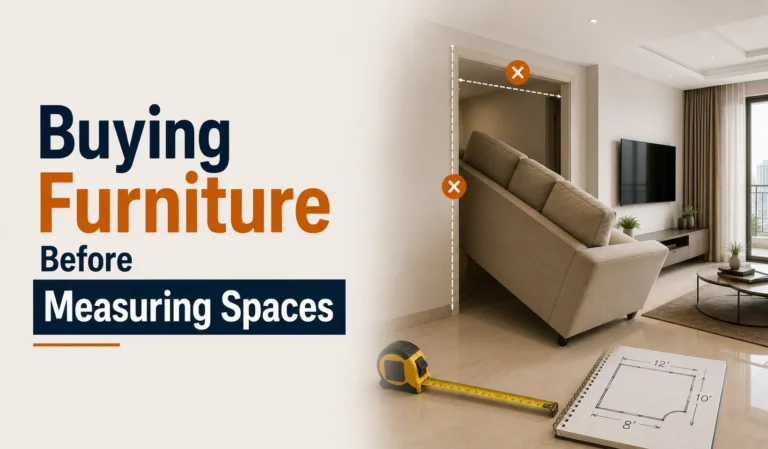
Mistake #4: Buying Furniture Before Measuring Spaces
This mistake appears in almost every apartment size.
But it becomes especially expensive in Mumbai homes.
The Sofa That Looked Perfect Until It Reached the Flat
A sofa can look ideal in a showroom.
The problem appears after delivery.
Suddenly:
- Walkways become narrow
- Rooms feel crowded
- Circulation becomes difficult
Why Dining Tables Become Space Problems in Many Mumbai Apartments
Many dining tables fit physically.
But they don’t fit functionally.
Once chairs are pulled out, movement becomes difficult.
The room feels smaller.
The Storage Shortages Most Homeowners Only Notice After Move-In
Furniture purchases often happen before storage requirements become clear.
Months later homeowners realize:
- Seasonal items have no place
- Suitcases remain visible
- Additional cabinets become necessary
That usually leads to additional spending.
Mistake #5: Underestimating Storage Requirements
If there is one regret we hear repeatedly, it is this.
“I wish we had created more storage.”
What Buyers Usually Focus On First
| What Buyers Focus On | What They Need Later |
|---|---|
| Aesthetics | Storage |
| Décor | Organization |
| Trendy Designs | Practical Use |
| Decorative Features | Daily Convenience |
Why Storage Problems Usually Appear After Move-In
Storage needs become visible only after real life begins.
Children’s items.
Festival decorations.
Luggage.
Household supplies.
Work equipment.
All of these require space.
Many homeowners only discover the problem after every cabinet is already finalized.
Are You Maximizing Every Inch of Your Home?
Get expert recommendations on maximizing storage before furniture and cabinetry decisions are finalized. Identify smarter ways to use available space without making your home feel cramped or cluttered.
Space Utilization Review
Storage Capacity Optimization
Furniture Layout Planning
Wardrobe & Cabinet Strategy
Hidden Storage Opportunities
Personalized Storage Roadmap
Mistake #6: Choosing the Cheapest Contractor Instead of the Right Partner
Many homeowners focus on one number.
The quotation amount.
The problem is that the cheapest quote often isn’t the cheapest project.
Cheapest Option vs Best Value Option
| Cheapest Option | Best Value Option |
|---|---|
| Lowest Quote | Transparent Quote |
| Limited Clarity | Detailed Scope |
| Hidden Exclusions | Defined Deliverables |
| Frequent Changes | Better Planning |
| Unclear Accountability | Structured Execution |
The Budget Categories Every Homeowner Should Define
| Category | Budget Required? |
|---|---|
| Kitchen | Yes |
| Wardrobes | Yes |
| Furniture | Yes |
| Lighting | Yes |
| Storage | Yes |
| Contingency | Yes |
The Expenses Most Homeowners Forget to Budget For
Common examples:
- Additional electrical work
- Storage additions
- Appliance integration
- Hardware upgrades
- Civil modifications
These costs often appear later.
Which is why so many budgets increase unexpectedly.
Mistake #8: Ignoring Electrical and Lighting Planning
Most homeowners think about electrical work after furniture decisions.
The smarter approach is the opposite.
The Electrical Regrets We Hear Most Often
Common complaints include:
- Not enough sockets
- Poor switch locations
- Missing charging points
- Inconvenient appliance connections
The Lighting Decisions That Affect Daily Comfort
Poor lighting often creates:
- Dark corners
- Reduced usability
- Visual clutter
Good lighting improves both functionality and comfort.
Electrical Planning Checklist
□ Sufficient charging points
□ Appliance locations finalized
□ Workstation requirements identified
□ Lighting zones finalized
□ Future requirements considered
Mistake #9: Following Trends Instead of Lifestyle Needs
A design trend may look fantastic online.
That doesn’t mean it fits your life.
Trend vs Reality
| Trend | Reality |
|---|---|
| Looks Good Online | May Not Suit Daily Life |
| Popular Design | Doesn’t Guarantee Functionality |
| Social Media Favorite | May Increase Maintenance |
| Trendy Today | May Feel Outdated Later |
Design Your Home for Living, Not Social Media
The most successful homes are rarely the trendiest.
They are usually the homes that support daily routines comfortably.
Your home should reflect your lifestyle, not somebody else’s Instagram feed.
Are You Planning Your New Home the Right Way?
Discuss your family size, storage needs, daily habits, and future requirements before making expensive design decisions. Build a home that works for your lifestyle from day one, not one you need to fix later.
Family Requirement Assessment
Storage & Space Planning
Daily Habit & Lifestyle Review
Future Needs Analysis
Budget & Design Prioritization
Personalized Home Strategy
Mistake #10: Delaying Interior Planning Until After Moving In
Many homeowners postpone planning because they want to settle in first.
Unfortunately, this often increases costs.
Why Interior Decisions Become More Expensive After Move-In
Once furniture arrives and routines begin:
- Changes become disruptive
- Labour becomes harder to schedule
- Modifications affect daily life
What Happens When You Try to Upgrade a Fully Occupied Home
Simple upgrades become larger projects.
Walls need protection.
Furniture needs movement.
Rooms become inaccessible.
Most homeowners wish they had finalized more decisions earlier.
Mistake #11: Trying to Figure Everything Out Alone
Many first-time homeowners feel pressure to make every decision themselves.
The problem?
A new home involves hundreds of decisions.
Why the First 60 Days After Possession Feel So Confusing
During this period homeowners often juggle:
- Interior decisions
- Budget discussions
- Furniture purchases
- Documentation
- Move-in planning
Everything happens simultaneously.
The Questions Most Experienced Homeowners Ask Before Spending Money
Experienced homeowners typically ask:
- Will this improve daily life?
- Will this create more storage?
- Will this still work five years from now?
- Is there a smarter way to use this space?
Those questions often prevent expensive mistakes.
Quick Self-Assessment: Are You Making Any of These Mistakes?
Answer honestly.
□ Have you completed a snag inspection?
□ Have you finalized storage requirements?
□ Have you created an interior budget?
□ Have you measured every room?
□ Have you reviewed electrical requirements?
□ Have you finalized your move-in timeline?
| Yes Answers | Interpretation |
|---|---|
| 0–2 | High Risk |
| 3–4 | Moderate Risk |
| 5+ | Well Prepared |
Are You Making the Right Decisions After Getting Possession?
Review your possession checklist, interior priorities, storage requirements, budget, and move-in timeline before making expensive decisions. Get clarity on what should happen first, what can wait, and where homeowners most commonly make costly mistakes.
Possession Checklist Review
Interior Priority Planning
Storage & Layout Assessment
Budget Allocation Guidance
Move-In Timeline Planning
Mistake Prevention Strategy
Before You Start Spending Money on Your New Home
Most possession-stage mistakes don’t happen because homeowners are careless.
They happen because homeowners are excited.
And excitement often creates urgency.
The homeowners who enjoy the smoothest experience are usually not the fastest movers.
They are the ones who pause, inspect carefully, define priorities, and make decisions in the right order.
The goal isn’t simply to move into a home.
The goal is to move into a home that works well for years.
Most homeowners don’t regret spending extra time on planning.
They regret the decisions they made when they were too excited to plan.
What should I do immediately after receiving flat possession?
Start with a detailed inspection, document collection, and snag identification before making interior decisions.
Should I move in before interior work?
Most homeowners find it easier to complete major interior work before moving in.
What inspections are necessary after possession?
Electrical, plumbing, flooring, wall, window, door, and balcony inspections are essential.
When should I hire an interior designer?
Ideally before major furniture purchases or contractor discussions begin.
How much time should I keep before moving in?
The answer depends on the scope of interior work, but rushing rarely creates a smoother experience.
What is the most expensive mistake homeowners make after possession?
Starting work without a complete plan often creates the largest financial impact.
How do I avoid budget overruns during interiors?
Define scope early, finalize storage requirements, and avoid frequent changes during execution.
What should I inspect before accepting possession?
Walls, flooring, plumbing, electrical points, windows, doors, and balconies.
Why do storage problems appear after move-in?
Most homeowners underestimate how much storage they actually need.
Should I buy furniture before interior planning?
Usually no. Furniture decisions work better after layouts and storage requirements become clear.
Can I start interior work immediately after possession?
Yes, but only after inspection, documentation, and snag reporting are complete.
Why do homeowners regret rushing decisions after possession?
Because many decisions made during excitement create long-term inconvenience later.