+ 91 8108850334
info@parineeinterio.in
+ 91 8108850334
info@parineeinterio.in

One of the first questions every homeowner asks after receiving possession is:
“How long will the interior work actually take?”
And the answers can be confusing.
One contractor promises 20-30 days.
An interior company says 8-10 weeks.
A friend tells you their project took 4 months.
Another says theirs stretched to 6 months.
So what’s the truth?
The truth is that there is no single answer.
Because interior timelines depend on:
- Scope of work
- Planning quality
- Design approvals
- Material availability
- Level of customization
- Site execution
The bigger challenge is that most homeowners are not really asking about project duration.
They’re actually asking:
- When can my family move in?
- How long will I keep paying rent?
- Should I start planning before possession?
- How much delay should I expect?
- Are these timelines realistic?
This guide will help you understand what a realistic home interior timeline looks like and how to avoid the delays that frustrate many homeowners.
The Biggest Mistake That Delays Most Home Interior Projects
Most homeowners blame delays on labour, contractors, or vendors.
But in reality, most delays begin much earlier.
Why Many Projects Lose Time Before Execution Even Starts
Before a single wardrobe gets installed or a kitchen gets manufactured, many projects lose valuable time because of:
- Unclear requirements
- Budget uncertainty
- Delayed decisions
- Multiple revisions
- Slow approvals
A project that looks ready often isn’t actually ready.
Why Trying to Save One Week in Planning Often Adds a Month Later
Many homeowners feel eager to start immediately after possession.
They want work to begin quickly.
The problem is that rushed planning often creates:
- Layout changes
- Material changes
- Storage revisions
- Electrical modifications
And every change affects the timeline.
A Reality We See Across Projects
The fastest projects aren’t the ones that start quickly. They’re the ones that start clearly.

How Long Will Your Interior Project Actually Take?
Get a personalized estimate of your interior timeline based on your apartment size, requirements, customization level, and move-in goals. Understand the real sequence of work so you can plan possession, interiors, and shifting without delays or confusion.
Project Timeline Estimation
Apartment Size & Scope Review
Customization Level Analysis
Work Sequence Breakdown
Move-In Goal Alignment
Personalized Delivery Roadmap
A Realistic Timeline of a Complete Home Interior Project
Most homeowners only see the installation phase.
In reality, several important stages happen before installation begins.
Typical Home Interior Timeline
Why Site Measurement Matters
Accurate measurements create the foundation for everything that follows.
Small errors here can create major issues later.
Why Design Planning Often Takes Longer Than Homeowners Expect
This stage includes:
- Layout decisions
- Storage planning
- Material discussions
- Furniture planning
Good decisions here often save time later.
Why Approvals Affect Timelines
Every revision adds time.
The faster approvals happen, the smoother the project usually moves.
Why Manufacturing Takes Time
Most modular kitchens, wardrobes, and storage units require factory production.
These processes cannot be rushed without affecting quality.
Why Installation Is Only One Part of the Timeline
Many homeowners think the project starts when installation begins.
In reality, much of the work has already happened behind the scenes.
How Long Does a Typical 2 BHK Interior Take?
This is the question most homeowners actually want answered.
Interior Timeline by Scope
What Usually Fits Within a 4-6 Week Timeline?
Typically:
- Modular kitchen
- Basic wardrobes
- Essential storage
- Limited customization
This approach works well for homeowners focused on move-in readiness.
What Changes Between 6-10 Weeks?
This is where many Mumbai homeowners fall.
Typical additions include:
- Additional storage
- Better finishes
- Utility storage
- TV units
- More customization
Why Premium Interiors Often Take Longer
Premium homes usually involve:
- Custom furniture
- Specialized materials
- Detailed design work
- Extensive storage solutions
More customization usually means more time.
Typical Timeline Comparison
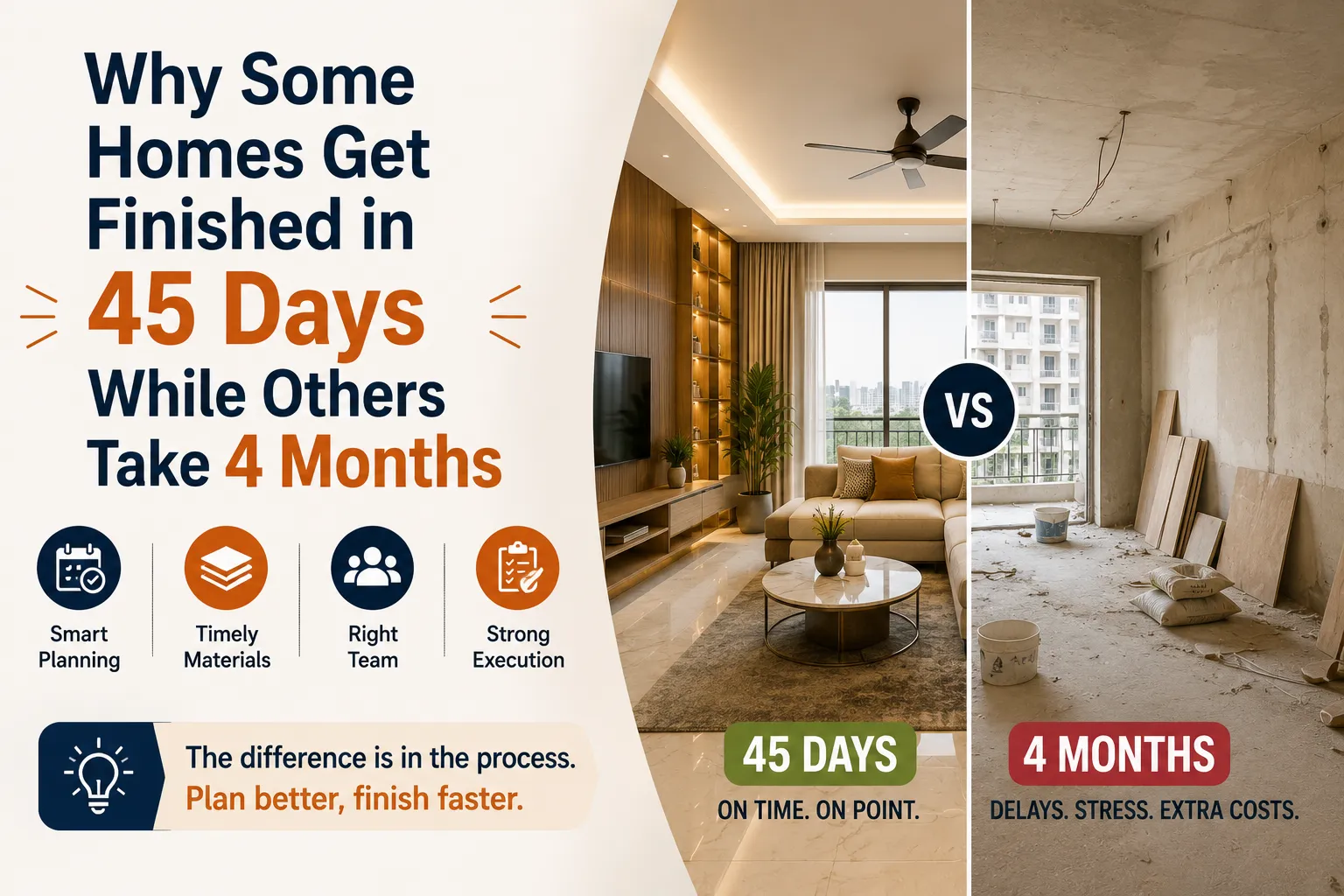
Why Some Homes Get Finished in 45 Days While Others Take 4 Months
Two homeowners can own similar apartments and still experience very different timelines.
Faster Projects vs Slower Projects
Why Customization Adds Time
Customization requires:
- Additional design work
- Manufacturing adjustments
- More approvals
The more unique the solution becomes, the longer it usually takes.
Why Material Availability Can Affect Schedules
Special laminates.
Imported hardware.
Custom finishes.
Availability often influences timelines.
How One Design Change Can Affect Multiple Stages
A simple modification may affect:
- Drawings
- Manufacturing
- Procurement
- Installation
This is why timeline changes often create a domino effect.

What’s the Right Move-In Date for Your Home?
Trying to coordinate rent, family schedules, school admissions, or relocation plans? Get guidance on the most realistic move-in date based on your interior progress, project requirements, and overall readiness of your home.
Move-In Timeline Estimation
Interior Completion Tracking
Family Schedule Alignment
School & Relocation Planning
Rental & Transition Coordination
Personalized Move-In Recommendation
Timeline Breakdown Room by Room
Different areas require different amounts of time.
Typical Installation Timeline
Which Areas Usually Take the Longest?
The longest timelines usually involve:
Why Kitchens Often Lead the Timeline
A kitchen combines:
- Storage
- Countertops
- Plumbing coordination
- Electrical coordination
Many moving parts must come together.
Why Wardrobes and Storage Require Careful Execution
Storage systems often require precise measurements and manufacturing.
Why Customized Storage Usually Takes Longer
The more customized the solution becomes, the longer production and installation generally take.
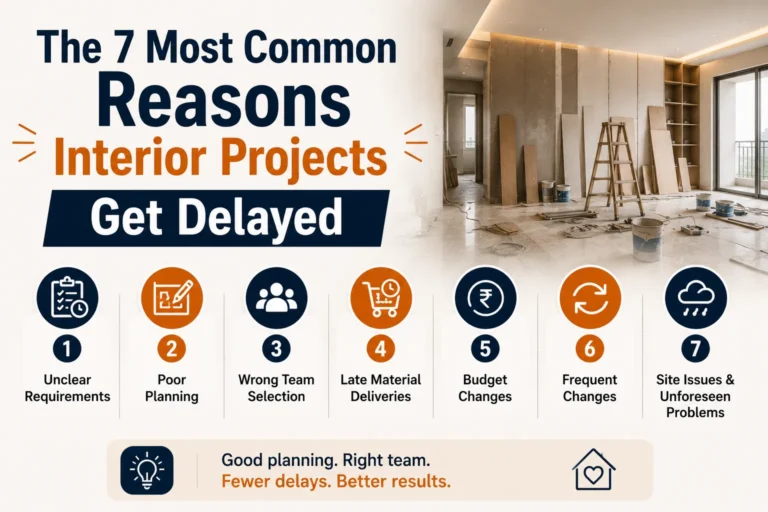
The 7 Most Common Reasons Interior Projects Get Delayed
Many homeowners assume delays happen because workers are slow.
That is rarely the main reason.
1. The Approval That Takes Longer Than Expected
Design approvals often create delays before execution starts.
2. The Requirement Changes That Keep Coming
Every change affects multiple stages.
3. When Materials Aren’t Available on Time
Material shortages can disrupt schedules quickly.
4. The Society Permissions Nobody Planned For
Some residential societies require approvals before work begins.
5. When Too Many People Manage Different Parts of the Project
Coordination challenges often create delays.
6. The Budget Revision That Interrupts Progress
Changes to budget priorities frequently affect execution schedules.
7. The Timeline That Was Never Realistic to Begin With
Some timelines are optimistic from day one.
One Observation We See Repeatedly
Most delays aren’t caused by workers. They’re caused by decisions.
How to Reduce Interior Timelines Without Compromising Quality
Homeowners often ask:
“How can I finish interiors faster?”
The better question is:
“How can I avoid unnecessary delays?”
The Checklist That Usually Saves the Most Time
□ Requirements finalized early
□ Budget clarity established
□ Designs approved quickly
□ Material selections completed
□ Mid-project changes avoided
□ Single point of accountability assigned
□ Society approvals secured
□ Possession timeline confirmed
Why Preparation Usually Saves More Time Than Speed
Most successful projects aren’t faster because people worked faster.
They’re faster because fewer disruptions happened.
Is Your Home Truly Ready for Move-In?
Discuss your possession date, family requirements, storage needs, and move-in goals to identify possible delays before they affect your project. Get clarity on what is complete, what is pending, and what needs priority attention.
Possession Date Review
Interior Completion Status Check
Family Requirement Mapping
Storage & Space Analysis
Delay Risk Identification
Personalized Readiness Report
When Should You Start Planning Interiors?
This is one of the most important timeline decisions.
The Homeowners Who Usually Experience the Smoothest Move-In
These homeowners often begin planning:
30-60 Days Before Possession
This allows enough time for:
- Requirements discussions
- Design development
- Budget planning
The Homeowners Who Usually Feel Pressured
These homeowners often begin:
Immediately After Possession
Projects can still move smoothly, but timelines become tighter.
The Situation That Usually Creates the Most Stress
Planning begins:
After Moving In
Now execution must happen around daily life.
This often creates inconvenience, delays, and disruption.
A Practical Timeline for First-Time Home Buyers
If this is your first home, use this simple roadmap.
A Simple Rule That Helps Most Homeowners
If you want to move in smoothly, start planning earlier than you think.
Can complete interiors be finished in 30 days?
Some limited-scope projects can. Most complete home interiors usually require more time.
How long does a 2 BHK interior project take?
Most 2 BHK interior projects take approximately 6-10 weeks depending on customization and scope.
What causes most project delays?
Design changes, delayed approvals, material availability issues, and unclear requirements are common causes.
Can I move in while interior work is ongoing?
It is possible, but it often creates inconvenience and may affect project efficiency.
When should I hire an interior designer?
Ideally 30-60 days before possession so planning can begin early.
Is factory-made furniture faster than on-site carpentry?
In many cases, yes. Factory production often improves consistency and predictability.
How much buffer time should I keep before shifting?
Many homeowners keep a 1-2 week buffer after the expected completion date.
Why do timelines vary so much between companies?
Different companies may include different levels of customization, scope, and execution methods.
Does a modular kitchen delay the project?
Not usually, but kitchen manufacturing and installation often influence the overall timeline.
How many site visits should homeowners expect?
This depends on project complexity, but periodic reviews are usually helpful.
What is the most important stage in the timeline?
Planning and approvals often have the biggest influence on overall project duration.
Can faster execution reduce quality?
Sometimes. Extremely aggressive timelines can increase the risk of mistakes and rework.
Before You Ask How Fast Your Interiors Can Be Completed
Most homeowners ask:
“How quickly can my interiors be finished?”
The smarter question is:
“How can I avoid the delays that make projects take twice as long?”
Because the goal shouldn’t be the fastest timeline.
The goal should be a predictable timeline.
A timeline where:
- Decisions happen on time
- Materials arrive on time
- Execution follows a clear plan
- Your family knows when to move in
That’s usually what creates a smooth interior experience—not simply finishing a few weeks earlier.
What Will Your Interior Timeline Actually Look Like?
Get a personalized estimate of your project timeline based on your possession date, apartment size, customization requirements, and move-in goals. Understand the real sequence of execution so you can plan confidently before committing to schedules, rentals, or shifting plans.
Possession Date Review
Apartment Size & Scope Analysis
Customization Level Assessment
Interior Work Sequence Planning
Move-In Goal Alignment
Personalized Timeline Roadmap