+ 91 8108850334
info@parineeinterio.in
+ 91 8108850334
info@parineeinterio.in

Most homeowners believe one thing:
“If I want a stylish home, I need expensive materials.”
And that’s exactly where budgets start going out of control.
Because once you think like that, you start choosing:
- Acrylic instead of laminates
- Veneer instead of simple finishes
- Heavy paneling instead of clean design
And suddenly, your budget shoots up.
At the same time, there’s another fear:
“What if budget materials look cheap?”
“What if they don’t last?”
Here’s the reality:
The right material choice can give you a premium look—without increasing your cost.
This blog will help you understand:
- What materials to choose
- What to avoid
- How to balance cost and look
What Makes a Material “Affordable but Smart”?
Not every low-cost material is a good decision.
Affordable doesn’t mean “cheapest.”
It means “best value for your money.”
Let’s break this into three simple factors.
Cost vs Longevity
Don’t just look at price.
A cheaper material that needs replacement in 2–3 years will cost more in the long run.
Always ask:
Will this last for daily use?
Finish Quality
This is what actually changes how your home looks.
Two homes with the same material can look completely different based on finish.
Matte laminates vs glossy surfaces — huge visual difference.
Maintenance
Think long-term.
Some materials:
- Catch stains easily
- Need frequent cleaning
- Lose shine quickly
Choose materials that are easy to maintain.
One important line to remember:
Affordable doesn’t mean lowest price—it means best value.
Plan Your Material Budget Before You Choose Anything
Material selection is where most budgets go out of control.
Why?
Because small upgrades in materials can increase your cost by 30–40% without you even noticing.
For example:
- Switching laminate to acrylic
- Adding veneer panels
- Choosing premium hardware
Each decision feels small — but adds up fast.
That’s why you should plan your material budget before finalizing anything.
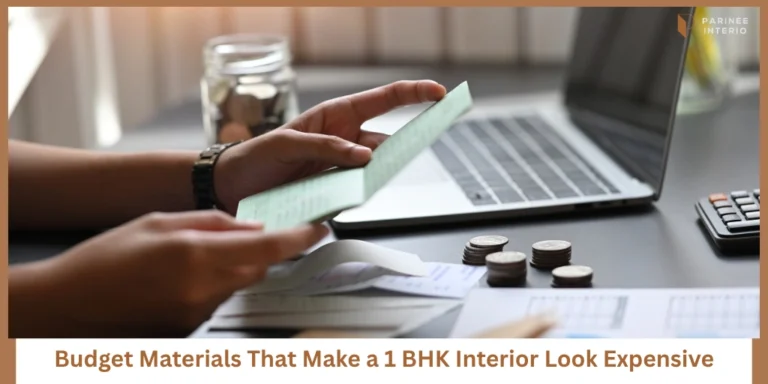
1 BHK Material Budget Planner + Cost Calculator
Plan your material choices and keep your interior budget under control from day one.
Avoid overspending on materials before finalising your design
Best Budget Materials for Kitchen (Where It Matters Most)
Kitchen is where you should be most careful.
Because this is a high-use area.
Laminates Instead of Acrylic
- Much more affordable
- Durable for daily use
- Available in many finishes
Acrylic looks premium, but the cost difference is significant.
Granite Countertops
- Long-lasting
- Easy to maintain
- Budget-friendly
Quartz looks good, but granite gives better value at lower cost.
Standard Hardware (Not the Cheapest)
This is where many people make mistakes.
They go for the cheapest hinges and channels.
Result:
- Doors start making noise
- Drawers stop working smoothly
Choose mid-range hardware — not the cheapest.
Kitchen is not where you cut corners blindly.
It’s where you balance cost and durability carefully.
Wardrobe Materials That Look Premium Without High Cost
Wardrobes take up a big part of your budget.
But smart choices can keep cost low and look clean.
Laminates with Matte Finish
- Clean and modern look
- Less maintenance
- More budget-friendly than glossy finishes
Matte laminates often look more premium than glossy ones.
MDF vs Plywood (When to Use What)
- Plywood → Better for long-term durability
- MDF → More affordable, works in dry areas
Use plywood where strength matters.
Use MDF where cost saving is needed.
Sliding vs Hinged Doors
- Sliding doors save space but cost more
- Hinged doors are more budget-friendly
Choose based on your room size and budget.
One key insight:
Finish choice makes more visual difference than material cost.
Living Room Materials That Give Maximum Visual Impact
Living room is where your home is judged visually.
But you don’t need expensive materials to make it look good.
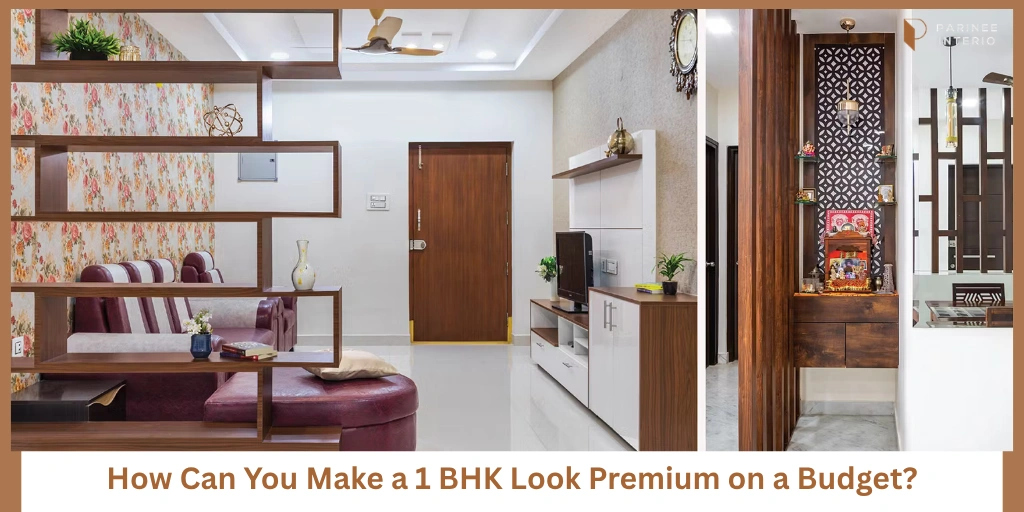
Laminate TV Panels
Instead of:
- Expensive stone panels
- Veneer finishes
Use laminates.
They give a clean look at a fraction of the cost.
Paint + Texture Combination
You don’t need expensive wall panels.
A simple paint + one texture wall can create a strong visual impact.
Minimal False Ceiling
Avoid heavy ceiling designs.
Use:
- Simple cove lighting
- Minimal design
This reduces cost and keeps the space clean.
Living room impact comes from design—not expensive materials.
Bedroom Materials That Balance Comfort and Budget
Bedrooms don’t need heavy design.
They need comfort.
So keep things simple.
- Laminates for wardrobes
- Plain wall finishes
- Basic lighting
Avoid overdesigning the bedroom.
Keep it calm and functional.
Materials You Should Avoid on a Tight Budget
Some materials look attractive — but they can destroy your budget quickly.
Avoid:
- High-gloss acrylic everywhere
- Veneer without proper budget
- Heavy wall paneling
- Overuse of premium finishes
These don’t just increase cost — they also increase maintenance.
These quickly push your budget beyond control.
Compare Material Costs Before Finalizing Your Design
Here’s a common problem.
Two quotes look similar.
But one uses:
- Laminates
And the other uses:
- Acrylic or veneer
And you don’t even realise the difference.
Material differences are not always clearly mentioned.
So comparison becomes confusing.
Material Comparison Sheet + BOQ for 1 BHK Interiors
Compare material choices clearly and avoid hidden cost differences in quotes.
Understand exactly what materials you are paying for

Smart Material Combinations That Work Best for 1 BHK Homes
Instead of focusing on one material, focus on combinations.
Some combinations that work well:
- Laminate + plywood
- Basic hardware + good finish
- Simple design + durable materials
This gives you:
- Better cost control
- Better durability
- Better overall look
Combination matters more than individual material.
Conclusion: Style Comes From Choices, Not Budget Size
A stylish home is not about how much you spend.
It’s about:
- What you choose
- Where you spend
- Where you save
You don’t need expensive materials to create a good-looking home.
You need the right decisions.
FAQs
Laminates, MDF (for dry areas), plywood, and standard-grade hardware are great choices. They balance cost, durability, and appearance.
Yes. Laminates are one of the best options because they are affordable, durable, and available in many finishes that look premium.
Plywood is more durable and moisture-resistant, while MDF is more affordable and works well in dry areas.
Focus on clean design, consistent finishes, and smart material combinations rather than expensive materials.
No. You can use premium materials in small areas for impact, but balance them with budget-friendly materials elsewhere.