+ 91 8108850334
info@parineeinterio.in
+ 91 8108850334
info@parineeinterio.in

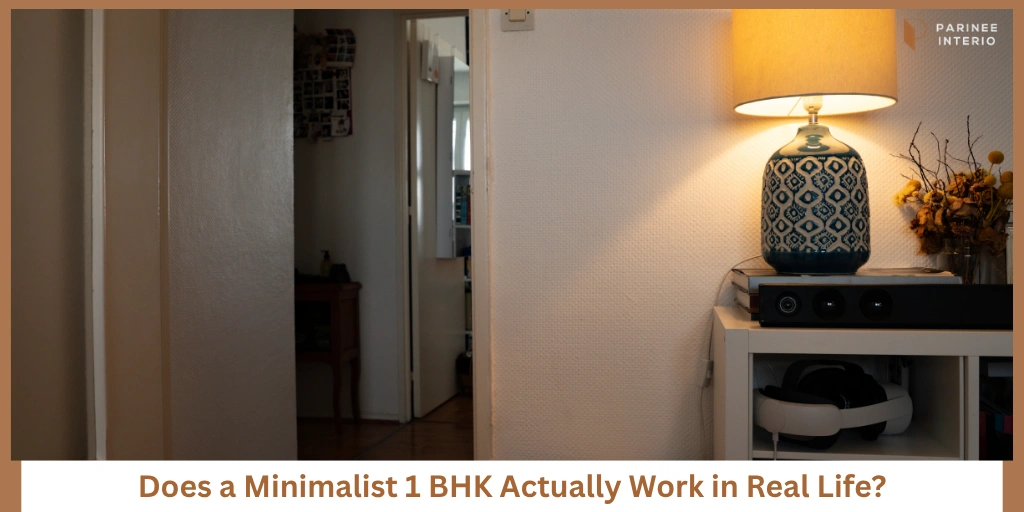
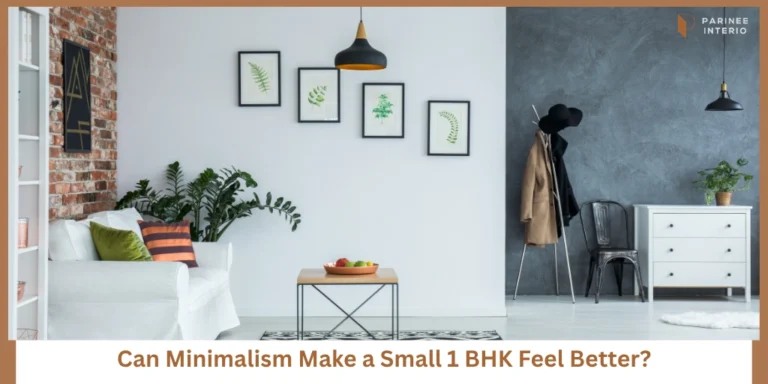
Minimalist homes look clean, calm, and spacious.
You see them online and think:
“This is exactly what I want.”
But once you try to live that way, things feel different.
- The space starts feeling too empty
- You don’t know where to keep things
- It becomes hard to maintain that “clean look”
And slowly, the home goes back to clutter.
So the question isn’t:
“Does minimalism look good?”
It’s:
“Does it actually work in daily life?”
Here’s the truth:
Minimalism is not about removing everything.
It’s about keeping what actually works.
And if done right, it can make your 1 BHK:
- Feel bigger
- Feel calmer
- Work better
Let’s break it down properly.
What Minimalism Actually Means in a 1 BHK
There’s a big misconception here.
Minimalism does not mean:
- Empty rooms
- No furniture
- Plain, lifeless spaces
In a small home, that approach doesn’t work.
Real minimalism means:
Fewer—but better—choices.
That means:
- Keeping only what you use
- Choosing functional furniture
- Avoiding unnecessary elements
So instead of removing everything…
You’re improving what stays.
Why Minimalist Design Works Well in Small Homes
Minimalism actually makes more sense in smaller homes than big ones.
Here’s why:
Reduces Clutter
Less stuff = less mess.
And that alone makes your space feel more relaxed.
Improves Openness
When surfaces are clean and layouts are simple:
- The room feels bigger
- Movement feels easier
Enhances Movement
No unnecessary furniture means:
- Clear walking paths
- Better usability
Small homes benefit the most from simplicity.
Space Planning Checklist for Minimal 1 BHKa
Going minimal without planning can make your home feel empty or incomplete. Plan before you remove or add anything.
Where Minimalism Works Best in a 1 BHK (And Where It Doesn’t)
This is where you need to be careful.
Minimalism is not equal in every space.
Works Best In:
Living Room
- Clean layout
- Fewer furniture pieces
- Open space
This creates the biggest visual impact.
Bedroom
- Less clutter
- Simple setup
- Calm environment
Helps in better rest and comfort.
Needs Balance In:
Kitchen
- You still need storage
- You still need functionality
Going “too minimal” here makes daily use difficult.
Wardrobe
- Storage is essential
- Clothes need space
Reducing storage too much creates clutter elsewhere.
Minimalism should never reduce usability.
8 Practical Minimalist Design Ideas That Actually Work
Let’s move beyond theory and look at what actually works in real homes.
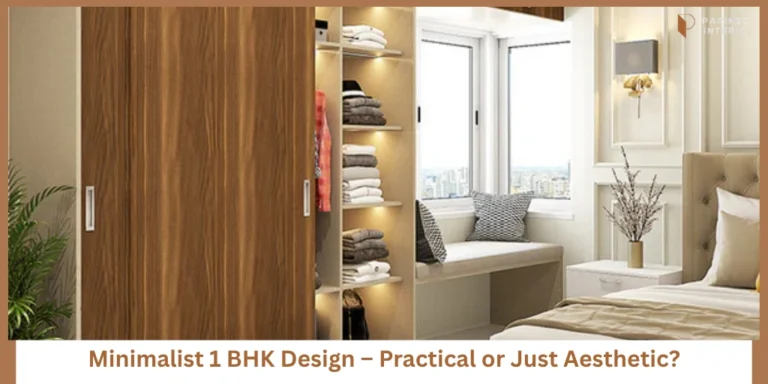
1. Fewer Furniture Pieces, Better Quality
Instead of:
- Multiple small pieces
Choose:
- Fewer, well-built furniture items
This improves:
- Visual clarity
- Longevity
2. Neutral Color Palette
Use:
- White
- Beige
- Light grey
These colors:
- Reflect light
- Make rooms feel open
3. Hidden Storage
This is the backbone of practical minimalism.
- Storage beds
- Closed cabinets
- Built-in units
Keep things out of sight.
4. Clean Layout Flow
Avoid:
- Blocking pathways
- Random placement
Ensure:
- Easy movement
- Logical layout
5. Wall-Mounted Units
- TV units
- Study desks
- Shelves
This keeps the floor free and makes space feel bigger.
Ready to Transform Your Space?
Talk to our expert designer today — no cost, no commitment. Just real ideas for your dream interior.
🔒 Your details are safe with us. No spam.
6. Multi-Functional Furniture
- Sofa cum bed
- Dining + work table
One piece, multiple uses.
7. Minimal Decor
Avoid over-decorating.
Instead:
- 1–2 statement pieces
- Clean surfaces
8. Consistent Finishes
Don’t mix too many materials.
Stick to:
- 2–3 finishes max
This creates a calm and cohesive look.
Minimal design is about clarity—not emptiness.
Common Mistakes People Make with Minimalist Interiors
This is where most people fail.
Removing Too Much
Trying to copy Pinterest leads to:
- Missing essentials
- Uncomfortable spaces
Ignoring Storage
No storage = visible clutter later.
Poor Planning
Minimalism without planning = confusion.
You need structure before simplicity.
How to Make Minimalism Practical for Daily Life
This is the most important part.
Because design is one thing… living is another.
Balance Design + Storage
Keep your home clean—but functional.
Keep Essentials Accessible
Don’t hide things you use daily.
Avoid Extreme Minimalism
You don’t need:
- Empty corners
- Bare walls everywhere
You need a home that works for your life.
1 BHK Furniture Layout Planner for Minimal Homes
Removing things without planning can reduce functionality. Plan your layout before simplifying your space.
Conclusion: Minimalism Works When It Supports Your Lifestyle
Minimalism is not about having less.
It’s about:
- Having what you need
- Removing what you don’t
- And organizing what remains
If your home:
- Feels comfortable
- Works smoothly
- Looks clean
Then you’ve done minimalism right.
Because in the end—
Your home should support your life, not restrict it.
Personalized Minimalist 1 BHK Layout & Design Plan
Share your layout and get a clean, practical design that balances minimal style with real-life usability.