+ 91 8108850334
info@parineeinterio.in
+ 91 8108850334
info@parineeinterio.in

Smart Home Office Ideas for Small Apartments Without Sacrificing Space
When people buy a home, they usually plan for:
- Bedrooms
- Kitchens
- Living rooms
- Storage
But today, many families need something else too.
A workplace.
The challenge is that most Mumbai apartments were never designed for full-time work-from-home lifestyles.
Yet thousands of professionals spend 8 to 10 hours every day working from these spaces.
Many people start by working from the dining table.
It feels convenient initially.
A few weeks later, the reality appears.
Work materials spread into living spaces.
Video calls become difficult.
Family routines create distractions.
The dining table no longer feels practical.
This is why many homeowners now ask:
“How can I create a home office in a small apartment without sacrificing valuable space?”
The good news is that you don’t need a dedicated room to create a productive workspace.
In most cases, smart planning matters far more than square footage.
Let’s look at solutions that actually work in real apartments.
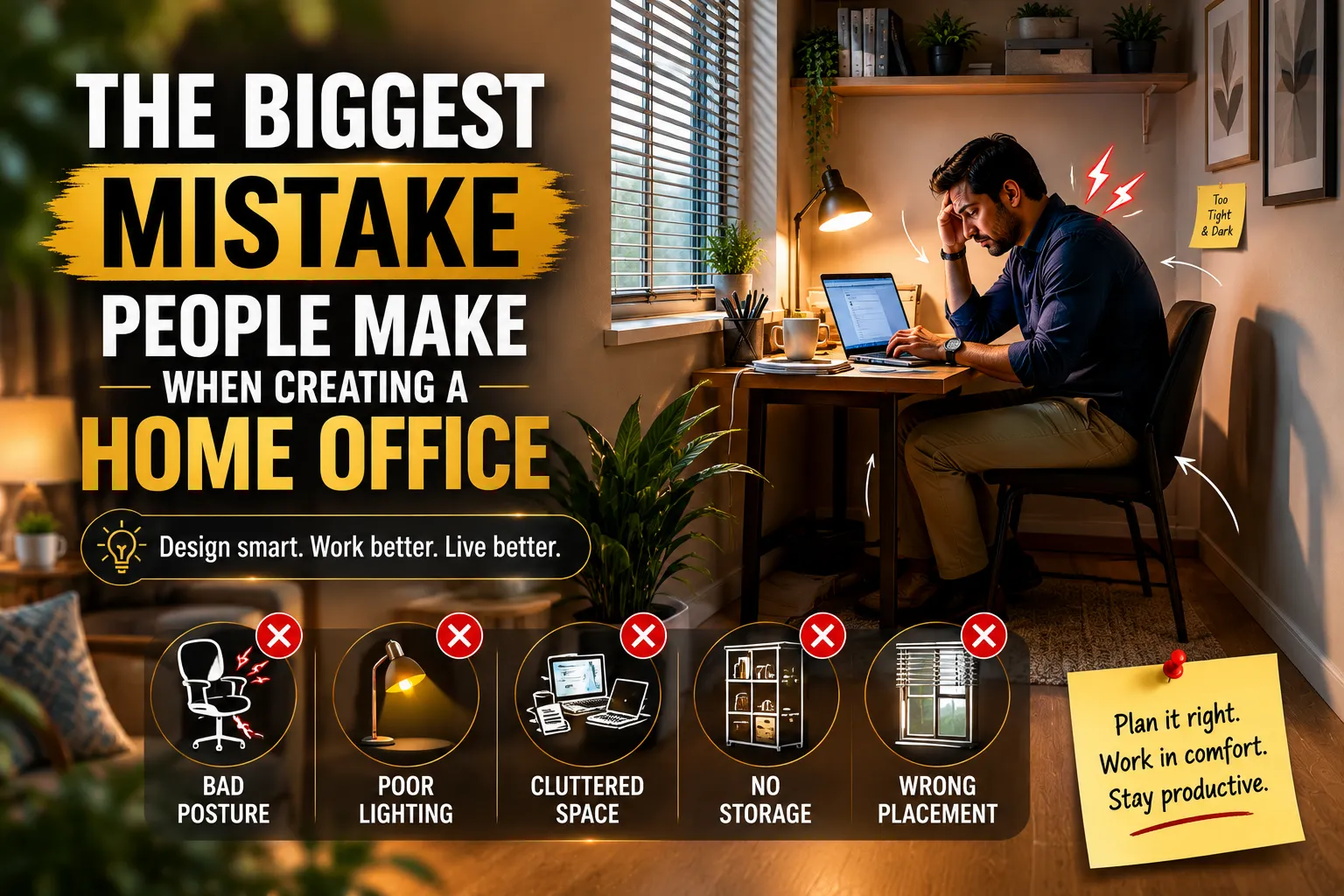
The Biggest Mistake People Make When Creating a Home Office
Many homeowners immediately start searching for:
- Desks
- Chairs
- Shelves
- Office décor
But that’s not where a productive workspace begins.
Why the Desk Is Usually Not the Biggest Problem
A desk occupies only a small part of your workday.
The bigger question is:
Where will you work?
What distractions will you face?
How easily can you focus?
How comfortable will the setup feel after six hours?
Many homeowners buy furniture first and solve these questions later.
Why Location Often Matters More Than Furniture
A basic desk in the right location usually performs better than an expensive desk in the wrong location.
The location affects:
- Noise levels
- Concentration
- Privacy
- Lighting
- Video calls
These factors influence productivity every day.
The Real Goal of a Home Office
The goal isn’t aesthetics.
The goal is:
- Focus
- Comfort
- Productivity
- Flexibility
A beautiful workspace won’t help if you’re constantly distracted.
Where Should Your Home Workspace Actually Be Set Up?
Get expert recommendations on the best location for a workstation based on your apartment layout, work style, lighting conditions, family routines, and daily movement patterns. Create a workspace that improves focus without disrupting home life.
Workstation Placement Analysis
Natural Light & Ventilation Review
Noise & Distraction Assessment
Ergonomic Setup Guidance
Space Optimization Suggestions
Personalized Home Office Plan
Home Office Option #1: Convert Part of the Living Room
For many apartment owners, the living room offers the easiest solution.
The key is creating boundaries without making the room feel crowded.
Advantages and Considerations
Advantages
- Uses existing space
- Cost-effective
- Easy access to power points
- No additional room required
Considerations
- Requires visual separation
- Family activity may create distractions
- Needs organization
- Video calls need planning
When This Setup Works Best
This approach often works well when:
- One person works from home
- Video calls are occasional
- Family activity remains manageable during work hours
Layout Decisions That Improve Focus
Simple changes often create better results.
Examples include:
- Facing the wall instead of the TV
- Creating a dedicated work corner
- Using shelves as visual separators
- Keeping work equipment organized
The goal is helping your brain recognize when you’re working and when you’re relaxing.
Home Office Option #2: Use the Second Bedroom as a Hybrid Space
Many 2 BHK owners have a room that serves multiple purposes.
This often creates the ideal work-from-home solution.
When a Guest Room Can Also Become a Productive Workspace
Guests may visit a few times each year.
Work happens almost every day.
This makes a guest room + office combination highly practical.
How Children’s Rooms Can Support Study and Work Requirements
Many families create separate zones:
- Study area
- Workstation
- Storage area
This helps maximize room usage.
Why Hobby Rooms Often Double as Excellent Home Offices
A hobby room usually already supports focused activity.
Adding a workstation often requires minimal changes.
The Advantage of Flexible Multi-Purpose Rooms
Modern apartments perform best when rooms serve multiple functions.
Guest Room
Guest Room + Office
Children’s Room
Study + Workstation
Hobby Room
Hobby + Work
Extra Bedroom
Office + Storage
Home Office Option #3: Create a Study Nook
Many homeowners assume they need an entire room.
In reality, some of the best home offices occupy surprisingly small areas.
The Forgotten Spaces Hidden Inside Many Apartments
Unused passages.
Corners.
Recessed wall sections.
These often become productive work zones.
Why Window-Side Workstations Remain Popular
Natural light improves comfort and reduces the feeling of working in a confined area.
Many homeowners prefer these locations for that reason.
The Corners That Can Become Highly Functional Workspaces
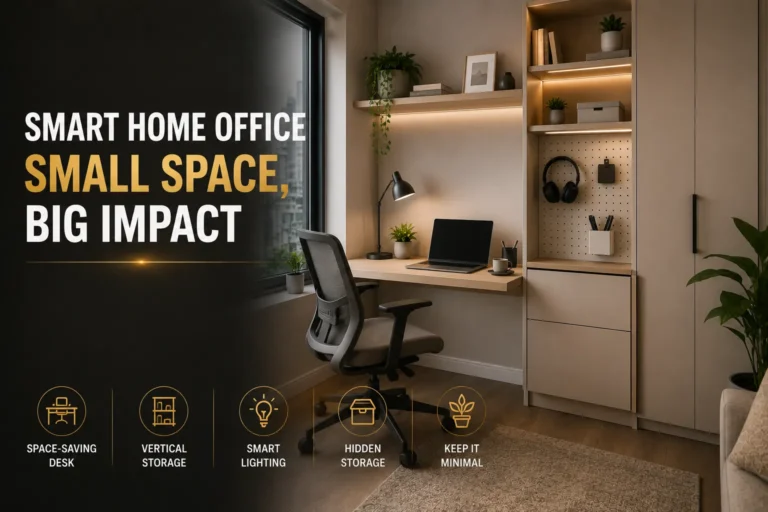
A corner often needs only:
- A desk
- A chair
- Good lighting
to become an effective workstation.
How Storage and Workspaces Can Coexist
Modern designs frequently combine:
- Shelving
- Storage
- Work surfaces
within a single compact footprint.
How Much Space Does a Home Office Actually Need?
This is one of the biggest misconceptions homeowners have.
What Most People Actually Need
A functional workspace usually requires:
- Desk surface
- Comfortable chair
- Power access
- Lighting
That’s it.
The Features Many Homeowners Assume Are Necessary
Many people believe they need:
- Large rooms
- Executive desks
- Extensive cabinetry
In reality, these are often optional.
Why Most Professionals Need Less Space Than They Think
Many productive workspaces fit comfortably within:
Compact Setup
20–25 sq. ft.
Standard Setup
30–40 sq. ft.
Larger Setup
50+ sq. ft.
Fit a Productive Workstation Without Losing Living Space
Learn how to fit a productive workstation into your apartment without compromising storage, movement flow, or family living areas. Get a practical space plan that balances work, comfort, and daily home life.
Workstation Space Planning
Storage vs Workspace Balance
Movement Flow Optimization
Noise & Distraction Reduction
Multi-Use Space Strategy
Personalized Layout Recommendation
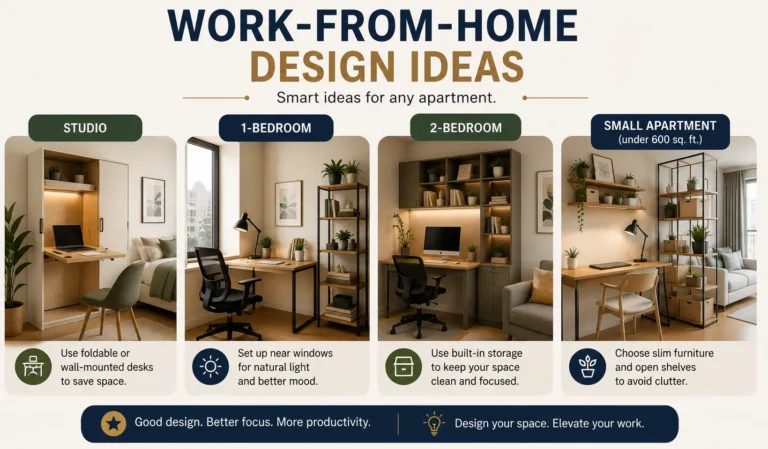
Work-From-Home Design Ideas for Different Apartment Types
Every apartment requires a different approach.
What Usually Works Best in a 1 BHK Apartment
Space is limited.
The best solutions often include:
- Living room workstations
- Study nooks
- Window-side desks
- Foldable workstations
Why Compact 2 BHK Apartments Offer More Flexibility
A second room often creates opportunities for:
- Hybrid office spaces
- Shared work zones
- Dedicated study corners
The Challenges Family-Oriented 2 BHK Homes Need to Solve
Families often balance:
- Work requirements
- Children’s study needs
- Storage requirements
This requires careful zoning.
Homes That Frequently Host Guests Need Flexible Solutions
The ideal setup often allows a room to switch functions quickly.
Flexibility becomes the priority.
Storage Solutions Every Home Office Needs
A productive workspace is rarely just about the desk.
Storage matters too.
The Documents That Need a Permanent Home
Loose paperwork quickly creates visual clutter.
Dedicated storage keeps work areas cleaner.
Why Cable Management Improves Productivity
Visible cables often make spaces feel chaotic.
Simple cable organization creates a cleaner workspace.
The Devices That Need Dedicated Storage
Many professionals use:
- Laptops
- Chargers
- Headsets
- Cameras
- External drives
Without storage, these quickly occupy valuable work surfaces.
The Supplies That Create Clutter Most Frequently
Pens.
Notebooks.
Files.
Stationery.
These need designated storage.
Hidden Storage Solutions That Work Well in Apartments
Popular options include:
- Drawer units
- Floating cabinets
- Storage benches
- Built-in shelving
Expert Insight
A cluttered workspace often creates a cluttered mind.
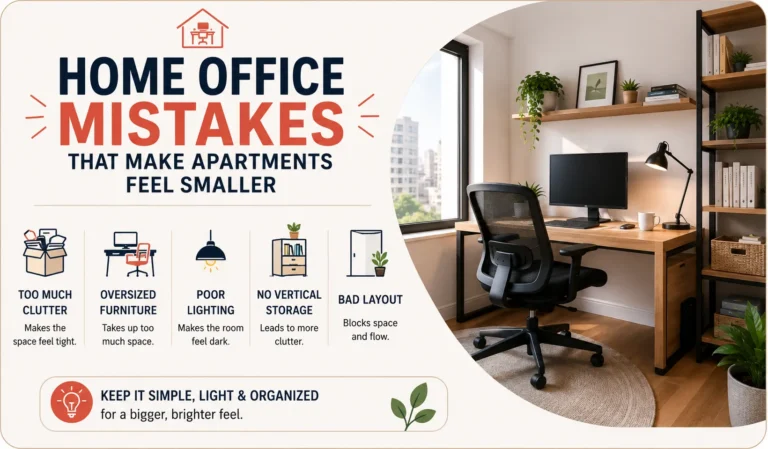
Home Office Mistakes That Make Apartments Feel Smaller
Some decisions reduce productivity and make homes feel crowded.
The Desk That Occupies More Space Than Necessary
Oversized desks often create circulation problems.
Why Vertical Storage Gets Ignored Too Often
Walls offer valuable storage opportunities.
Many homeowners never use them.
The Cable Mess That Makes Spaces Feel Disorganized
Poor cable management affects appearance and usability.
Why Blocking Natural Light Creates Multiple Problems
Natural light improves:
- Comfort
- Mood
- Productivity
Blocking it usually creates the opposite effect.
What Happens When Work Clutter Spreads Across the Home
When work expands into living areas, work-life separation becomes difficult.
Why Comfort Matters More Than Appearance
A stylish chair that feels uncomfortable after three hours is not a good office chair.
Create a Productive Work-From-Home Setup That Actually Works for You
Review your apartment layout, work schedule, storage requirements, and family routines to design a focused and comfortable home office setup. Get clarity on where to place your workstation for better productivity without disturbing home life.
Workstation Placement Strategy
Layout & Space Optimization
Work Schedule Compatibility Review
Storage & Utility Planning
Family Routine Alignment
Personalized WFH Setup Plan
How to Create Better Video Call Spaces at Home
Video calls are now part of everyday work.
Your workspace should support them.
The Background People Notice Before Anything Else
Simple backgrounds often work best.
Avoid visual distractions.
Why Lighting Placement Changes How You Appear on Camera
Good lighting improves:
- Visibility
- Professional appearance
- Video quality
The Sound Issues Many Apartment Owners Ignore
Noise from:
- TV areas
- Kitchens
- Common spaces
can affect calls significantly.
Privacy Strategies That Actually Work
Options include:
- Room dividers
- Strategic furniture placement
- Flexible work zones
Even small adjustments can improve privacy.
What If Two People Work From Home?
This challenge has become increasingly common.
Shared Workspaces That Actually Work
Some couples work successfully from the same room using designated zones.
Why Split-Zone Layouts Often Improve Productivity
Creating separate work areas helps reduce distractions.
How Time-Based Space Sharing Solves Space Constraints
Different schedules sometimes allow workspace sharing.
The Acoustic Challenges Most Couples Discover Quickly
Noise becomes the biggest issue.
Meeting overlap often creates conflicts.
Planning ahead helps avoid frustration.
A Home Office Planning Checklist for Apartment Owners
Before finalizing your setup, review this checklist.
□ Dedicated work zone identified
□ Electrical points available
□ Natural lighting evaluated
□ Ergonomic seating selected
□ Storage requirements planned
□ Video call background considered
□ Work-life separation strategy created
□ Future work requirements evaluated
□ Cable management planned
□ Noise sources identified
How can I create a home office in a small apartment?
Start by identifying the most suitable location based on privacy, lighting, and daily routines rather than furniture preferences.
What is the minimum space required?
Many productive workspaces fit comfortably within 20–40 square feet.
Is a living room workspace practical?
Yes, provided clear boundaries and organization strategies exist.
What furniture works best for compact offices?
Compact desks, ergonomic chairs, floating shelves, and storage-integrated furniture often work best.
How do I hide my workspace after work hours?
Foldable desks, storage cabinets, and multi-purpose furniture help conceal work areas.
What if two people work from home?
Split zones, hybrid rooms, and schedule-based workspace sharing often provide effective solutions.
How do I avoid clutter around my workstation?
Dedicated storage, cable management, and regular organization routines help maintain a cleaner workspace.
Can a guest room double as a home office?
Yes. This is one of the most practical solutions for many 2 BHK apartments.
Where should I place a workstation in a 2 BHK apartment?
The best location depends on privacy requirements, natural light, family routines, and noise levels.
Is natural light important for a home office?
Yes. It improves comfort, mood, and productivity throughout the workday.
What is the biggest mistake people make with home offices?
Most people focus on furniture before deciding where the workspace should actually be located.
How much storage should a home office have?
Enough to keep daily work essentials accessible while preventing clutter from spreading into living spaces.
Before You Start Shopping for Desks and Chairs
Many homeowners assume they need a bigger apartment to create a productive home office.
Most don’t.
What they usually need is better planning.
The best workspace isn’t necessarily the largest one.
It’s the one that supports your work style, family routines, and daily habits.
A productive home office doesn’t have to take over your home.
It simply needs to fit naturally into the way you live.
And when that happens, work feels easier, your apartment feels more organized, and every square foot works harder for you.
Find the Most Productive Spot for Your Home Workspace
Get personalized recommendations based on your apartment layout, work requirements, storage needs, and family routines. We’ll help you identify the most productive location for a workstation without sacrificing valuable living space or disrupting daily home activities.
Workstation Location Analysis
Apartment Layout Optimization
Work Requirement Mapping
Storage & Utility Planning
Family Routine Alignment
Personalized Workspace Strategy