+ 91 8108850334
info@parineeinterio.in
+ 91 8108850334
info@parineeinterio.in

The day you receive your flat keys, two thoughts usually compete in your mind.
“Let’s move in immediately.”
And…
“Maybe we should finish the interiors first.”
If you’ve recently received possession of a flat in Mumbai, you’re probably facing the same dilemma.
After all, every day you delay shifting may mean:
- Additional rent
- Temporary accommodation costs
- Extra travel
- Family pressure to move quickly
At the same time, every day you move in early may mean:
- Dust
- Noise
- Workers entering your home
- Delayed projects
- Furniture damage
- Daily inconvenience
The challenge is that many homeowners make this decision based on emotion rather than practical planning.
And that often creates months of frustration later.
The good news?
There is no universal answer.
The right decision depends on:
- Your family situation
- The amount of interior work required
- Your timeline
- Your budget
- Your long-term plans for the home
Let’s look at what experienced homeowners usually do and what tends to create fewer regrets.
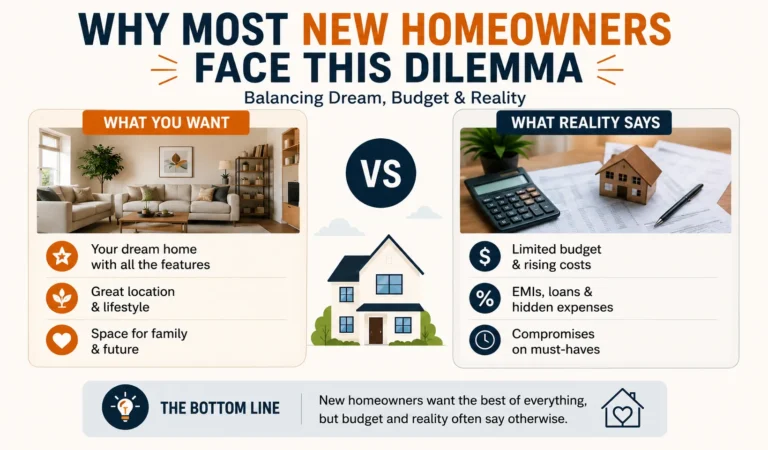
Why Most New Homeowners Face This Dilemma
This decision affects almost every new homeowner.
Especially in cities like Mumbai where possession timelines, rent costs, and family schedules create pressure.
Why Waiting Feels Expensive After Paying EMIs and Rent
Many homeowners face a difficult situation.
The home loan EMI starts.
Rent continues.
Possession is complete.
Naturally, the urge to move in quickly becomes strong.
Every additional week feels expensive.
Why Families Feel Pressure to Settle Into the New Home Quickly
Common reasons include:
- School schedules
- Work commitments
- Family expectations
- Lease expiry dates
These practical realities often push homeowners toward an early move-in.
Why Homeowners Dream of Getting Everything Right the First Time
At the same time, many families view a new home as a long-term investment.
They want:
- Better storage
- A functional kitchen
- Comfortable bedrooms
- A well-organized home
They don’t want to move in and then live through months of disruption.
The Reality Most Homeowners Discover Later
The decision isn’t really about moving.
It’s about deciding whether your family should live through the interior process or move into a finished home.
Are You Truly Ready to Move In?
Get a professional review of your flat and understand whether you’re truly ready to move in or whether completing interiors first would create a smoother, more comfortable experience for your family.
Flat Readiness Evaluation
Interior Completion Gap Analysis
Essential vs Optional Work Review
Comfort & Livability Assessment
Timeline Decision Guidance
Personalized Move-In Recommendation
What Happens When You Move In Before Completing Interior Work?
Many homeowners choose this route.
Sometimes it makes sense.
Sometimes it creates challenges they never expected.
Pros and Cons of Moving In Before Interior Work Is Complete
Advantages
- Save rent
- Immediate occupancy
- Utilities activated quickly
- Faster settlement
- Lower temporary accommodation costs
Disadvantages
- Dust and noise
- Daily disruption
- Extended project timelines
- Workers inside occupied spaces
- More cleaning and maintenance
The Problems Most Homeowners Don’t Expect Until They Experience Them
On paper, moving in early sounds practical.
Reality often looks different.
Common challenges include:
- Furniture gets dusty or damaged
- Daily cleaning becomes exhausting
- Workers need access throughout the home
- Children face safety risks
- Elderly family members experience inconvenience
- Privacy becomes difficult
Many homeowners say they expected inconvenience.
Few realize how long it continues.
Why Interior Projects Usually Take Longer Once a Family Moves In
When a home is occupied:
- Working hours become restricted
- Certain rooms remain unavailable
- Furniture needs protection
- Daily routines interrupt execution
The result?
Projects that could finish in weeks may stretch much longer.
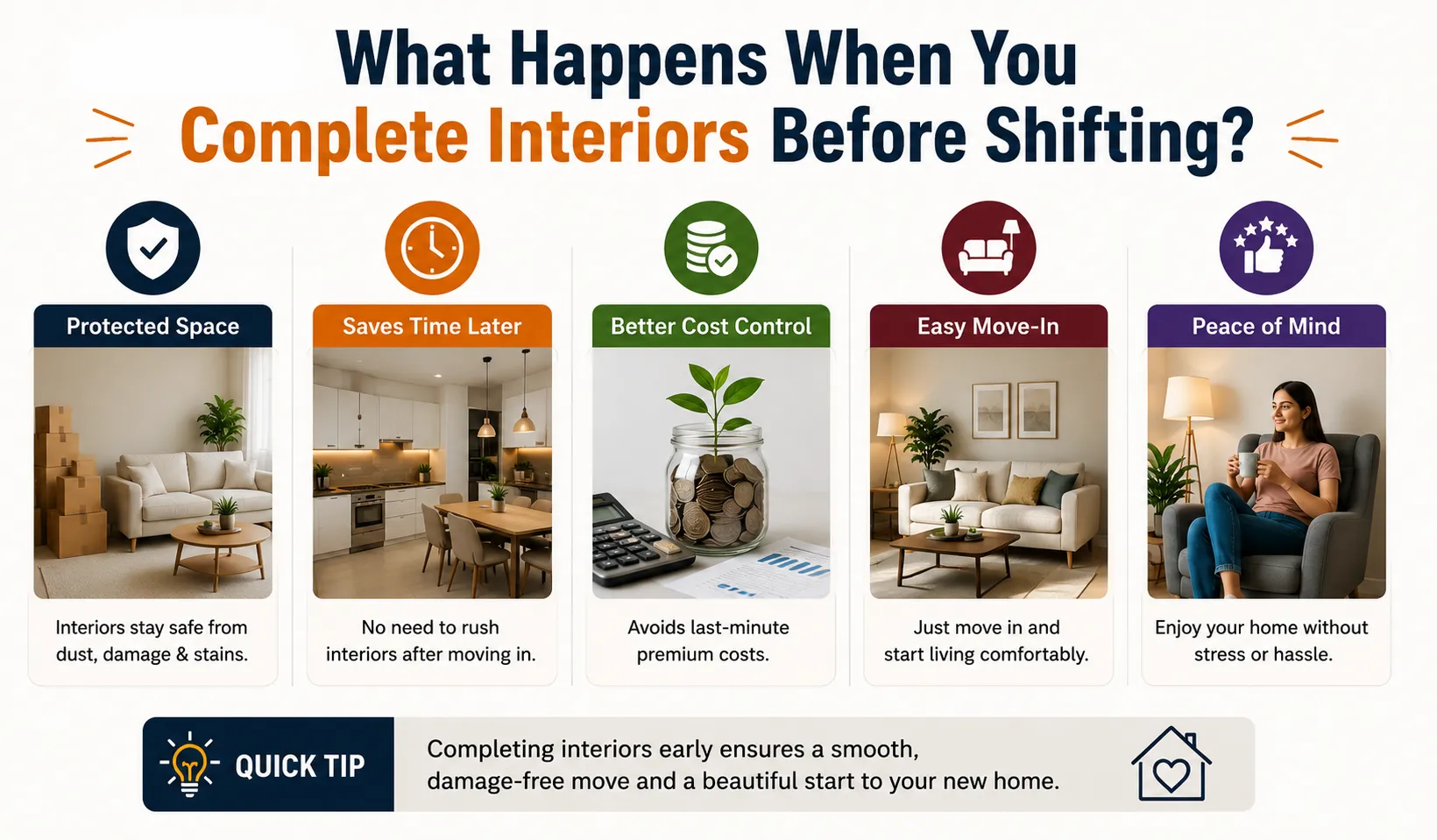
What Happens When You Complete Interiors Before Shifting?
Now let’s look at the alternative.
Why Empty Homes Usually Allow Faster Execution
When the home is empty:
- Workers have unrestricted access
- Materials move easily
- Multiple teams can work simultaneously
This often reduces project timelines.
Why Interior Changes Cost Less Before Occupancy
Changes made before shifting are usually easier.
There are fewer obstacles.
Less furniture.
Less disruption.
Fewer adjustments.
Why Installation Becomes Cleaner and More Organized
Activities such as:
- Modular kitchen installation
- Wardrobe installation
- False ceiling work
- Electrical modifications
are much easier in an empty apartment.
Why Homeowners Usually Make Better Decisions Before They Settle In
Once families move in, decisions often become reactive.
Before occupancy, decisions tend to be more strategic.
That usually leads to better long-term outcomes.
Why One Complete Setup Is Easier Than Constant Adjustments
Many homeowners who move in early eventually deal with:
- Repeated modifications
- Additional contractor visits
- Constant rearrangement
A finished home often eliminates these issues.
Expert Insight
Most experienced homeowners regret moving in too early. Very few regret waiting a few extra weeks for a completed home.
Want a Clear Timeline for Your Interiors, Possession & Move-In?
Get a personalized project timeline that helps you understand the ideal sequence for interiors, possession, and shifting. We map your entire journey so you know exactly when to plan, execute, and move in without delays or confusion.
Interior Execution Timeline
Possession-to-Move-In Planning
Phase-Wise Work Breakdown
Budget & Timeline Alignment
Delay Risk Analysis
Personalized Home Roadmap
Which Interior Work Must Be Completed Before Shifting?
Not every item requires completion before move-in.
But some definitely should.
Interior Priority Guide

Must Complete Before Moving
- Modular Kitchen
- Wardrobes
- Electrical Changes
- False Ceiling
- Storage Units
Can Wait Until Later
- Artwork
- Decorative Accessories
- Accent Decor
- Soft Furnishings
- Decorative Styling
Why Daily Life Becomes Difficult Without a Functional Kitchen
The kitchen is one of the first spaces your family uses every day.
Without it:
- Storage becomes difficult
- Meal preparation becomes inconvenient
- Daily routines suffer
Why Storage Problems Appear Immediately After Move-In
The moment you unpack:
- Clothes need wardrobes
- Household items need storage
- Documents need organization
Without storage, clutter arrives quickly.
Why Electrical Modifications Should Never Wait
Electrical work often involves:
- Wall cutting
- Dust
- Noise
- Safety concerns
Completing these changes before occupancy usually makes far more sense.
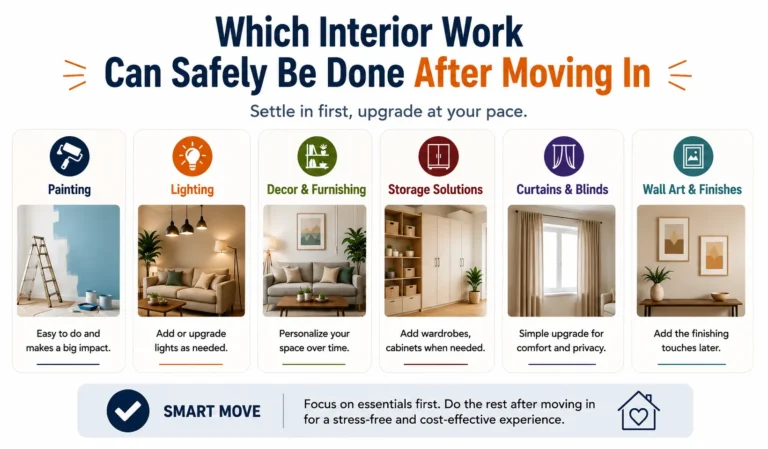
Which Interior Work Can Safely Be Done After Moving In?
Some upgrades can easily wait.
Decorative Elements
Examples include:
- Wall art
- Mirrors
- Decorative accessories
Loose Furniture
Certain furniture pieces can arrive later.
Soft Furnishings
Examples include:
- Curtains
- Rugs
- Cushions
Styling Improvements
Decorative styling rarely affects daily functionality.
These items can often be added gradually.
The Cost Difference Nobody Talks About
Many homeowners think this decision affects convenience.
It also affects money.
Cost Comparison
Before Shifting
- Lower project duration
- Lower cleaning costs
- Lower furniture risk
- Lower rework risk
- Lower family disruption
After Shifting
- Higher project duration
- Higher cleaning costs
- Higher furniture risk
- Higher rework risk
- Higher family disruption
Why Delays Often Increase Total Project Costs
Delays create expenses such as:
- Additional labour visits
- Repeated transportation
- Extended supervision
- Longer timelines
These costs rarely appear in the original budget.
Why Small Interior Changes Become More Expensive Later
A simple modification before move-in is often straightforward.
The same modification after occupancy may require:
- Moving furniture
- Cleaning
- Temporary disruption
The cost is not always financial.
Often it is convenience.
What’s the Smartest Way to Plan Your Move-In?
Discuss your possession timeline, family requirements, budget, and interior scope to determine the smartest move-in strategy. Get clarity on whether to start interiors immediately, plan in phases, or align your shifting timeline for a smoother experience.
Possession Timeline Review
Family Requirement Mapping
Budget Planning Strategy
Interior Scope Evaluation
Move-In Sequence Planning
Personalized Execution Roadmap
Decision Framework — Should You Shift First or Finish Interiors First?
The answer depends on your situation.
Finish Interiors First If
- You can wait 4–8 weeks
- This is your long-term home
- Storage matters significantly
- You want complete customization
- Multiple rooms require work
- Family comfort is a priority
Shift First If
- Rent burden is very high
- Only minor work remains
- Budget constraints exist
- Immediate occupancy is necessary
- Most essential interiors are already complete
Quick Decision Matrix
A Realistic Timeline for Mumbai Homeowners
Many homeowners underestimate interior timelines.
Here’s a realistic example.
Week 1: Inspection and Measurements
Activities include:
- Site inspection
- Measurements
- Requirement discussions
Week 2: Design and Budget Finalization
Activities include:
- Layout planning
- Material selections
- Budget approvals
Week 3–6: Interior Execution
Activities include:
- Kitchen work
- Wardrobes
- Storage solutions
- Electrical modifications
- Ceiling work
Week 7: Final Cleaning and Inspection
Activities include:
- Deep cleaning
- Quality checks
- Snag correction
Week 8: Move-In
This sequence usually creates the smoothest experience.
Typical Interior Timeline Overview
Can I live in my flat while interior work is happening?
Yes, but it often creates inconvenience, dust, noise, and longer project timelines.
How much interior work should be completed before moving?
Ideally, kitchens, wardrobes, storage units, electrical work, and major installations should be completed first.
Is modular kitchen installation possible after shifting?
Yes, but installation is usually easier and faster before occupancy.
Does moving in early increase project costs?
In many cases, yes. Delays, cleaning, protection measures, and repeated visits can increase costs.
How long should I delay shifting after possession?
The answer depends on project scope. Many complete-home projects require approximately 6–8 weeks.
What do most Mumbai homeowners prefer?
Many homeowners who plan to stay long term prefer completing major interiors before shifting.
Should wardrobes be completed before move-in?
Yes. Storage becomes essential immediately after unpacking.
Can decorative work wait until later?
Absolutely. Decorative upgrades rarely affect daily functionality.
What is the biggest mistake homeowners make after possession?
Moving in before essential storage and kitchen work are complete.
Is it cheaper to finish interiors before moving?
In many situations, yes. Execution tends to be more efficient and creates fewer disruptions.
What if my rent and EMI overlap?
This is one of the main reasons some homeowners choose early occupancy despite the inconvenience.
When should I hire an interior designer after possession?
Ideally immediately after possession or even before possession if floor plans are available.
Before You Decide Whether to Move In or Wait
The real question isn’t:
“Can I move in before interiors are complete?”
Most homeowners can.
The better question is:
“Do I want my family to live through the interior process?”
If only a few decorative items remain, moving in early may make sense.
But if kitchens, wardrobes, storage, electrical work, and major installations are still pending, waiting a few extra weeks often creates a smoother experience.
For many Mumbai homeowners, the most expensive part of moving in early isn’t the money.
It’s the months of inconvenience that follow.
And that’s something most families would happily avoid if they had the chance to decide again.
Is Your Home Truly Ready for a Smooth Move-In?
Get expert guidance on whether your home is ready for occupancy, which interior work should be completed first, and how to create a move-in timeline that works for your family, budget, and lifestyle.
Home Readiness Assessment
Priority Interior Work Planning
Move-In Timeline Strategy
Budget & Completion Alignment
Family Routine Considerations
Personalized Move-In Roadmap