+ 91 8108850334
info@parineeinterio.in
+ 91 8108850334
info@parineeinterio.in


If you’ve recently received possession of your flat, you’ve probably heard two completely different pieces of advice.
One person says:
“Just hire a contractor and save money.”
Another says:
“Hire an interior designer if you want to avoid costly mistakes.”
Both arguments sound convincing.
And that’s exactly why many homeowners get confused.
Because this decision affects much more than the final appearance of your home.
It affects:
- Your budget
- Your timeline
- Your storage
- Your daily comfort
- Your future flexibility
- Your overall experience during the project
The challenge is that many homeowners compare interior designers and contractors as if they perform the same job.
They don’t.
And misunderstanding that difference often leads to problems later.
If you’re wondering:
- Do I need an interior designer or contractor?
- Can a contractor handle my home interiors?
- Is hiring an interior designer worth the extra cost?
- Which option is better for a new 2 BHK?
- Who should manage my home interiors?
This guide will help you make an informed decision based on your home, budget, and lifestyle.
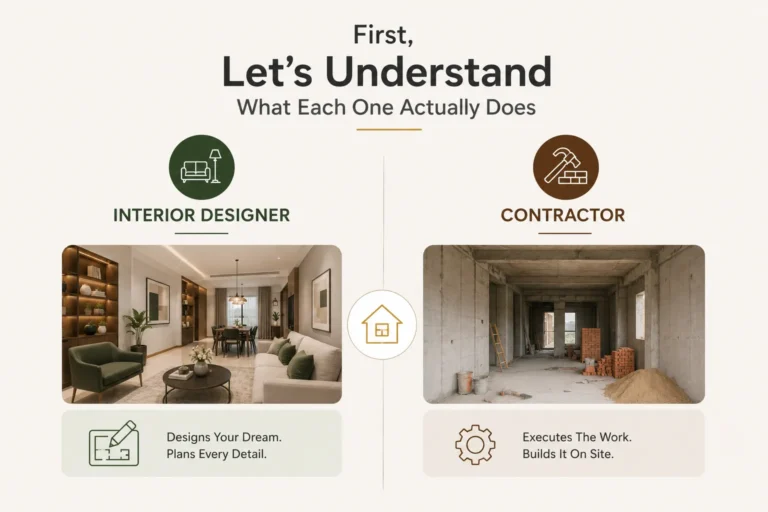
First, Let’s Understand What Each One Actually Does
Many homeowners compare designers and contractors without fully understanding their responsibilities.
The easiest way to understand the difference is this:
A designer typically focuses on what should be built.
A contractor typically focuses on how it gets built.
| Interior Designer | Contractor |
|---|---|
| Plans the Home | Executes the Work |
| Creates Layouts | Builds According to Instructions |
| Solves Space Challenges | Focuses on Assigned Execution |
| Develops Storage Solutions | Handles Labour and Installation |
| Coordinates Multiple Aspects | Completes Specific Work Packages |
| Helps with Functionality | Focuses on Execution Quality |
What an Interior Designer Typically Handles
Most interior designers work on:
- Space planning
- Storage planning
- Furniture layouts
- Material recommendations
- Lighting concepts
- Functional improvements
- Vendor coordination
- Overall project direction
What a Contractor Typically Handles
Most contractors focus on:
- Carpentry
- Civil work
- Electrical work
- Installation
- Labour management
- Site execution
Neither role is better.
They simply solve different problems.
Not Sure Whether Your Project Requires a Contractor, an Interior Designer, or Both?
Get expert guidance based on your home’s size, complexity, storage requirements, lifestyle needs, and project goals. We’ll help you understand the level of professional support your project actually needs before you commit.
Home Layout Assessment
Project Complexity Evaluation
Storage Requirement Analysis
Lifestyle & Family Needs Review
Contractor vs Designer Guidance
Personalized Project Strategy
The Biggest Misconception About Contractors and Interior Designers
One of the biggest myths homeowners believe is:
“They basically do the same thing.”
In reality, their responsibilities are very different.
| Myth | Reality |
|---|---|
| They Do the Same Job | Their Responsibilities Are Different |
| Contractors Design Homes | Most Contractors Execute Instructions |
| Designers Only Improve Appearance | Designers Often Improve Functionality |
| Contractors Handle Everything | Most Focus on Execution Work |
| Designers Are Only for Luxury Homes | Many Homeowners Use Them for Planning Support |

Why Confusion Often Creates Problems Later
Problems usually begin when homeowners assume somebody is handling a responsibility that actually belongs to someone else.
For example:
- Storage planning
- Furniture layouts
- Space utilization
- Lighting strategy
- Electrical positioning
When nobody takes ownership of these decisions early, costly adjustments often appear later.
When Hiring Only a Contractor Makes Sense
A contractor can absolutely be the right choice in certain situations.
When Detailed Plans Already Exist
If layouts, drawings, storage plans, and furniture plans are already finalized, a contractor may be all you need.
When the Scope Is Small and Straightforward
Examples include:
- One-room upgrades
- Wardrobe replacement
- Kitchen replacement
- Minor renovation work
When You Already Have Construction Experience
Some homeowners are comfortable with:
- Material selection
- Site supervision
- Layout decisions
- Vendor management
In these situations, professional design support may create less value.
When You Prefer Managing Vendors Yourself
Some homeowners enjoy direct involvement.
If you’re comfortable coordinating multiple vendors, a contractor-led approach may work well.
When Daily Site Coordination Is Not a Problem
Execution requires frequent decisions.
If you have the time and willingness to stay involved, a contractor can be an effective option.
When Hiring an Interior Designer Makes Sense
Now let’s look at situations where professional planning often creates significant value.
Why First-Time Homeowners Often Need More Than Execution Support
First-time homeowners usually face hundreds of decisions.
Examples include:
- Storage requirements
- Furniture sizing
- Material choices
- Layout decisions
- Electrical planning
Many mistakes happen simply because homeowners have never dealt with these decisions before.
When Storage Becomes One of the Most Important Priorities
Storage shortages are among the most common homeowner complaints after move-in.
A well-planned storage strategy often affects comfort for years.
Why Space Utilization Matters More Than Most Homeowners Expect
This is especially true for:
- 1 BHK apartments
- Compact 2 BHK homes
- Urban apartments
When space is limited, every square foot matters.
When Time Is Already Limited
Many homeowners underestimate the amount of coordination required.
Projects often involve:
- Carpenters
- Electricians
- Plumbers
- Painters
- Hardware suppliers
- Furniture vendors
Managing all of them requires time.
When Different Family Members Have Different Needs
Parents.
Children.
Work-from-home professionals.
Senior citizens.
Different lifestyles create different requirements.
Good planning often helps balance these needs.
Why Many Homeowners Prefer One Coordinated Vision
Without a clear plan, homes sometimes feel disconnected.
Different decisions made at different times often create inconsistent results.
Before You Decide Who Should Execute Your Project, Understand How Your Space Can Function Better
Get expert insights into your home’s layout, storage opportunities, and space utilization potential. Understanding what your space can realistically achieve often makes it easier to decide the level of professional support your project actually needs.
Home Layout Assessment
Storage Opportunity Analysis
Space Utilization Review
Room Functionality Improvements
Lifestyle-Based Recommendations
Personalized Planning Insights
Cost Comparison: Interior Designer vs Contractor
Cost is often the biggest concern.
Let’s compare both approaches objectively.
| Factor | Interior Designer | Contractor |
|---|---|---|
| Upfront Cost | Higher | Lower |
| Planning Support | Extensive | Limited |
| Coordination | Managed | Often Homeowner-Managed |
| Risk of Rework | Lower | Depends on Planning Quality |
| Accountability | Broader Responsibility | Scope-Specific |
| Layout Support | Yes | Limited |
| Storage Planning | Yes | Depends on Homeowner Instructions |
Why the Lowest Quote Doesn’t Always Lead to the Lowest Final Cost
Many homeowners compare only the starting cost.
The challenge is that project costs rarely stay limited to the initial quote.
Changes during execution often increase spending.
Service Cost vs Total Project Cost
A contractor may cost less upfront.
An interior designer may cost more upfront.
The more important question is:
Which approach leads to the lowest overall project cost after everything is complete?
That’s where planning often becomes valuable.
A Common Reality Across Residential Projects
The cheapest quote can sometimes become the most expensive project.
Who Saves More Money in the Long Run?
There is no universal answer.
It depends on the project.
Situations Where Contractors Can Reduce Costs
Contractors may help reduce costs when:
- Scope is clear
- Plans already exist
- Few design decisions remain
- Homeowners actively manage execution
Situations Where Designers Often Prevent Waste
Designers frequently create value through:
- Better layouts
- Better storage planning
- Better budget allocation
- Reduced rework
- Better space utilization
Why Rework Often Becomes the Most Expensive Part of a Project
Small changes become expensive when execution has already started.
Examples include:
- Electrical changes
- Layout revisions
- Furniture adjustments
- Storage modifications
Why Final Costs Usually Depend More on Planning Than Pricing
Many budget overruns happen because of decisions made after work starts.
Not because labour rates changed.
Not because material costs changed.
Because planning happened too late.
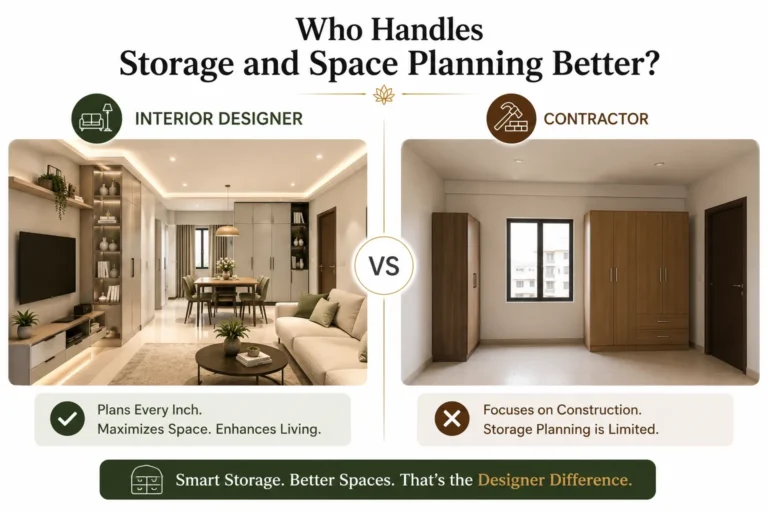
Who Handles Storage and Space Planning Better?
This is one of the most important questions for apartment owners.
Especially in Mumbai, where space comes at a premium.
Why Storage Problems Continue Long After Move-In
Storage issues rarely appear immediately.
They appear months later.
When:
- Clothes increase
- Household items increase
- Children’s requirements grow
- Work equipment accumulates
Storage mistakes tend to stay visible every day.
Why Good Planning Often Matters More Than Extra Space
Many homeowners believe they need a larger apartment.
Sometimes they simply need a better layout.
The Cost of Getting Storage Wrong
Consider a family of four in a Mumbai 2 BHK.
Execution-Only Approach
- Standard wardrobes
- Limited storage analysis
- Generic layouts
Result:
- Additional cabinets later
- Visible clutter
- Reduced flexibility
Planned Approach
- Storage based on lifestyle
- Better utilization of available space
- Future requirements considered
Result:
- Better organization
- Better functionality
- Fewer modifications later
What Most First-Time Homeowners Regret
After multiple projects, certain regrets appear repeatedly.
Why Storage Always Feels Smaller Than Expected
Most families underestimate storage requirements.
The Furniture Purchase That Looked Perfect in the Showroom
Furniture often looks very different once it reaches the home.
Electrical Decisions That Become Expensive Later
Additional points and modifications often cost more after execution begins.
Why Mid-Project Changes Usually Increase Costs
Changes become more expensive as work progresses.
The Stress of Coordinating Multiple Vendors
Many homeowners underestimate how much coordination a project requires.
The Budget Surprises Nobody Anticipates at the Start
Unexpected changes remain one of the biggest causes of overspending.
Before Committing to an Execution Strategy, Make Sure the Plan Is Right
Review your home’s layout, family requirements, storage priorities, budget, and lifestyle needs with an interior expert. Get clarity on what your home actually requires before choosing how the project should be executed.
Home Layout Review
Family Requirement Assessment
Storage Priority Planning
Budget Evaluation
Space Optimization Opportunities
Personalized Project Recommendations
Questions to Ask Before Making Your Decision
Instead of asking:
“Which option is better?”
Ask:
“Which option is better for my situation?”
How Much Design Guidance Will Your Home Need?
Some homes require extensive planning.
Others require very little.
Who Will Coordinate Multiple Vendors?
Vendor coordination requires both time and attention.
How Often Can You Visit the Site?
Daily decisions often affect project outcomes.
Are You Comfortable Making Technical Decisions?
Examples include:
- Materials
- Hardware
- Layouts
- Storage solutions
- Furniture sizing
Is This Your Long-Term Family Home?
Long-term homes often benefit more from thoughtful planning.
A Simple Decision Matrix
| Situation | Best Option |
|---|---|
| Limited Execution Work | Contractor |
| Complete Home Planning Required | Interior Designer |
| First-Time Homeowner | Interior Designer |
| Experienced Homeowner | Depends on Scope |
| Complex Family Requirements | Interior Designer |
| Simple Upgrade Project | Contractor |
| Significant Storage Challenges | Interior Designer |
| Major Renovation | Interior Designer |
What is the difference between an interior designer and a contractor?
A designer usually focuses on planning, layouts, storage, and functionality. A contractor primarily focuses on executing the work.
Can a contractor handle interior design?
Some contractors offer design support, but many primarily focus on execution and construction-related work.
Is hiring an interior designer worth the extra cost?
For complex projects, first-time homeowners, and homes with significant storage requirements, professional planning often creates value.
Which option is better for first-time homeowners?
Many first-time homeowners benefit from design guidance because they face numerous decisions for the first time.
Can I hire both a designer and contractor?
Yes. Many successful projects involve both.
Who manages the project timeline?
This depends on the project structure. Some designers coordinate timelines. In other projects, homeowners manage schedules directly.
Which option reduces mistakes?
Good planning generally reduces the likelihood of costly mistakes and revisions.
Is an interior designer more expensive than a contractor?
Usually yes in terms of upfront fees. However, total project costs depend on planning quality and execution decisions.
Can a contractor help with storage planning?
Some can, but storage planning is often a core strength of professional interior design.
Which option is best for a new apartment?
The answer depends on project complexity, storage needs, available time, and homeowner experience.
Do I need a designer for a 2 BHK apartment?
Many homeowners choose design support because space utilization and storage become important in compact homes.
Can planning actually affect my budget?
Yes. Better planning often helps reduce waste, rework, and unnecessary spending.
Before You Decide Who Should Handle Your Home Interiors
The question isn’t:
“Which option is cheaper?”
The better question is:
“Which option gives me the highest confidence that my home will work the way my family needs it to?”
Designers and contractors serve different purposes.
A contractor may be the right choice when plans are already clear.
An interior designer may be the right choice when planning, storage, functionality, and coordination still need attention.
The smartest decision isn’t the one that costs the least at the beginning.
It’s the one that gives you the best outcome when the project is complete and your family starts living in the home every day.
Still Unsure Whether You Need a Contractor, an Interior Designer, or Both?
Let’s review your layout, storage requirements, project scope, family needs, and budget priorities together. You’ll receive clear recommendations based on your specific home—not generic advice that may not apply to your situation.
Layout & Space Planning Review
Storage Requirement Assessment
Project Scope Evaluation
Family Lifestyle Analysis
Budget Priority Review
Personalized Execution Recommendations